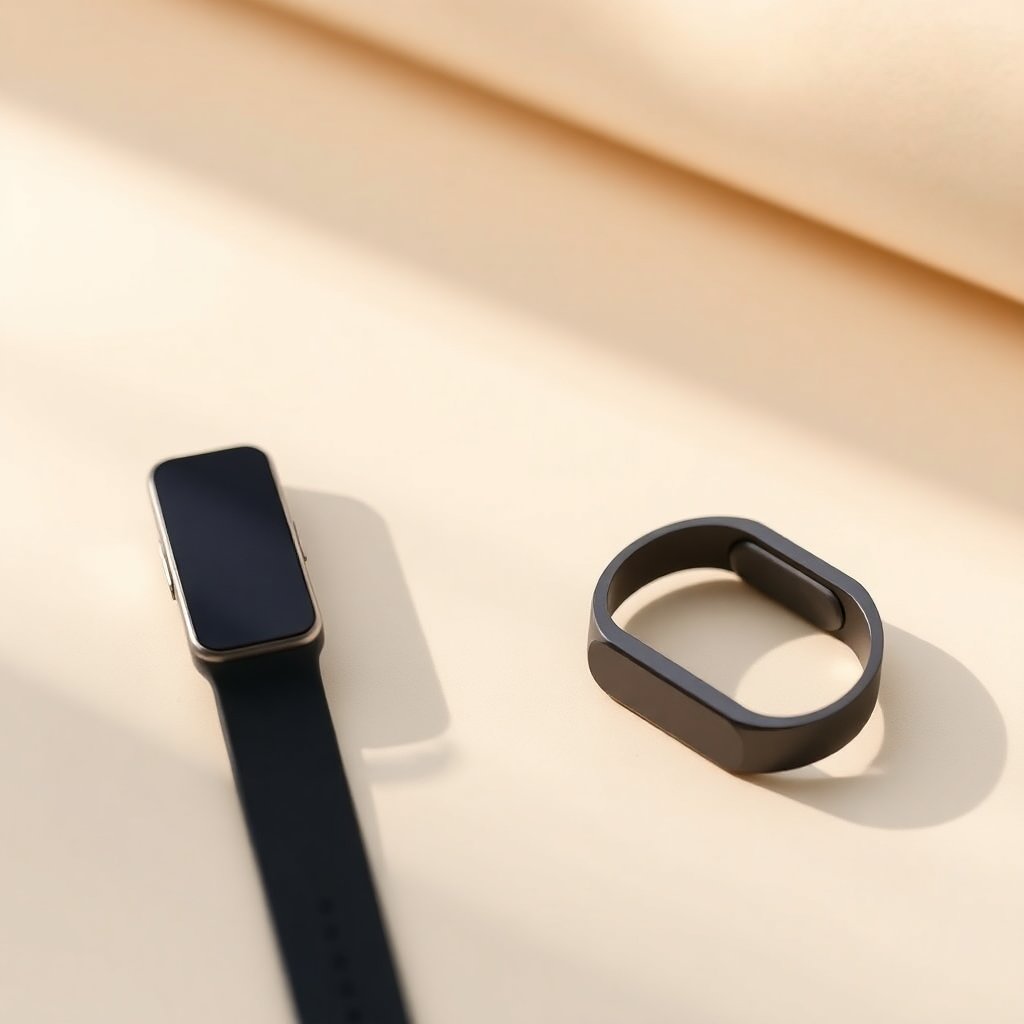
Screenless wearables have quietly become the most interesting corner of the fitness-tech world in 2026. The Oura Ring 5 started shipping in June, Samsung's Galaxy Ring has settled into the Android ecosystem, and WHOOP's strap-based 5.0 keeps pulling in serious athletes. The pitch is the same across all of them: get real recovery and sleep data without strapping a glowing rectangle to your wrist. But the devices get there in very different ways, and the right pick depends almost entirely on how you plan to use it.
This guide breaks the two camps apart — rings versus traditional trackers — and walks through subscriptions, sleep and recovery accuracy, battery life, and comfort, so you can figure out which screenless tracker actually fits your life.
As an Amazon Associate we earn from qualifying purchases.
The two camps, explained
Smart rings are the newer, quieter option. A ring like the Oura Ring 5 or Samsung Galaxy Ring is a band of titanium with sensors tucked against the inside of your finger. There's no display at all — everything lives in a companion app on your phone. Because the finger is a strong spot for reading heart rate and blood-oxygen signals, rings can be genuinely accurate at night while being small enough to forget you're wearing.
Traditional fitness trackers are the familiar wrist devices. Some, like Fitbit's Charge line, have a small screen you glance at. Others, like WHOOP 5.0, deliberately skip the screen too and live entirely in the app — a strap that reads recovery and strain around the clock. Garmin sits at the sporty end, with GPS watches built for runners and cyclists who want live metrics on their wrist mid-workout.
If you want the short version: rings win on comfort and discretion, wrist devices win on live workout feedback and, in WHOOP's case, deep recovery coaching. The interesting fights happen in the middle.
The subscription question (this is the big one)
Before anything else, look at the total cost over a couple of years, not the sticker price. This is where the camps split hardest.
Oura Ring 5 starts at $399 for the base Silver and Black finishes, with premium colorways running to $499. On top of that hardware cost, Oura's insights sit behind a membership priced around $5.99 per month or roughly $69.99 per year. You own the ring, but the detailed scores and trends effectively require the ongoing fee.
WHOOP 5.0 flips the model entirely. There is no upfront device cost — the band comes free with a membership, and that membership runs from about $199 to $359 per year depending on the tier, with the mid-range Peak plan around $239. You're renting the experience rather than buying hardware, which can be cheaper year one but adds up over time.
Samsung Galaxy Ring takes the opposite stance from both: you pay once for the ring and there's no ongoing subscription. Health data flows into Samsung Health with no monthly fee, which makes it the standout "set it and forget it" option for anyone allergic to recurring charges. The tradeoff is that it works best paired with a compatible Android phone.
Subscription-free challengers have been multiplying, too. Ultrahuman shipped a subscription-free ring in June 2026 aimed squarely at Oura, and RingConn's rings have built a following on the same no-fee promise. If avoiding a monthly bill is your priority, the ring market now has real options — a point worth weighing alongside our roundup of the best fitness gear you can get for under $100, where one-time purchases stretch further.
→ Shop Samsung Galaxy Ring on Amazon
Sleep and recovery tracking
For most people shopping in this category, sleep and recovery are the whole reason to buy. Here's how the contenders stack up.
Oura built its reputation on sleep, and the Ring 5 continues that. It produces a nightly Readiness score, detailed sleep-stage breakdowns, and long-term trend tracking that many reviewers still consider the benchmark for a device this small. If your main goal is understanding how well you slept and whether you're recovered enough to train hard, Oura remains the reference point.
WHOOP is the recovery specialist on the wrist side. Because it's worn around the clock on a strap, it captures continuous heart-rate variability and builds a recovery score plus a daily "strain" target. WHOOP delivers similar recovery-focused insight to Oura, just in a strap you barely notice rather than a ring. Athletes who want a coach nudging them toward the right training load tend to gravitate here.
Samsung Galaxy Ring covers the core metrics — sleep tracking, heart rate, and an energy-style readiness score inside Samsung Health — and layers in handy extras like a finger-pinch gesture to control your phone and a lost-ring locator. It's a strong all-rounder rather than the deepest analyst.
Fitbit remains the friendly, approachable choice. A Fitbit Charge gives you sleep stages, a daily readiness read, heart rate, and step tracking with one of the least intimidating apps in the category — ideal if you want guidance without a spreadsheet's worth of data. If you're building a broader routine around rest, it pairs naturally with the ideas in our guide to the products that actually help you sleep better.
Battery life
Battery is a quiet dealbreaker, because a tracker that's on the charger is a tracker that isn't collecting the overnight data you bought it for.
Smart rings generally lead here. Most modern rings run several days on a charge, and subscription-free challengers have pushed battery as a headline feature — Ultrahuman's 2026 ring, for example, advertised around a 15-day battery, though real-world numbers vary by usage and are worth treating as a best case rather than a guarantee. The Oura Ring 5 and Samsung Galaxy Ring both target multi-day life, which is enough to wear through a full night's tracking and still have charge to spare.
Wrist devices are more of a mixed bag. Fitbit's Charge line typically stretches for several days between charges. WHOOP uses a slide-on battery pack you can charge without taking the band off, which sidesteps the "off your wrist means missing data" problem entirely. Garmin's endurance watches can go a week or more, but the always-on GPS models drain far faster when you're actually training.
Comfort and everyday wear
This is where rings have quietly won a lot of converts. A ring is smaller than any smartwatch or band and, for many people, more comfortable to wear day and night. There's no screen glowing in a dark bedroom, nothing catching on sleeves, and nothing that reads as "I'm wearing a gadget" in a meeting or at dinner.
The catch is fit. A ring has to be sized correctly, and it lives on a finger that swells and shrinks with heat, salt, and exercise — so most brands ship a sizing kit first. Rings also can't show you anything mid-run; every glance means pulling out your phone.
Wrist trackers trade discretion for immediacy. WHOOP's screenless strap is light and easy to forget, and Fitbit's slim bands are comfortable enough for sleep, but a wrist device is always more visible than a ring. Garmin's larger sports watches are the least discreet of all, which is exactly the point for the athletes who want them.
For an independent, tested take on how these rings compare head to head, the wearables team at Tom's Guide's smart ring coverage is a reliable place to sanity-check the latest models before you buy.
Which one is right for you?
Buy a smart ring (Oura Ring 5, Samsung Galaxy Ring, or a subscription-free rival) if: you care most about sleep and recovery, you want something you'll genuinely forget you're wearing, and you don't need live stats during workouts. Choose Oura for the deepest analysis (and accept the subscription), or the Galaxy Ring if a one-time purchase with no monthly fee matters more to you.
Buy WHOOP 5.0 if: you're training seriously and want a recovery-and-strain coach, you're fine renting the experience through a membership, and you like the idea of a screenless strap you never take off.
Buy a Fitbit if: you want an approachable, affordable all-rounder with a screen, easy sleep and step tracking, and no interest in wading through advanced analytics.
Buy a Garmin if: you're a runner or cyclist who needs live GPS, pace, and training metrics on your wrist during the workout itself — a different job than any ring is built for.
Whichever camp you land in, the honest advice is to match the device to the behavior you'll actually keep up. The best tracker is the one you wear every night without thinking about it. For more one-time-purchase picks that punch above their price, our roundup of the best noise-canceling headphones under $200 is a good companion read for anyone building out a focused, recovery-friendly setup.
→ Shop Fitbit Charge on Amazon
The bottom line
The screenless-tracker race in 2026 comes down to a simple trade. Rings give you comfort, discretion, and strong sleep data, split between Oura's subscription-backed depth and the growing pack of no-fee alternatives led by Samsung. Wrist devices give you either WHOOP's around-the-clock recovery coaching or Fitbit's friendly, low-friction tracking. There's no single winner — just the one that fits how you sleep, train, and spend. Figure out whether you're paying once or paying monthly, decide whether you want data on your finger or your wrist, and the rest sorts itself out.
As an Amazon Associate we earn from qualifying purchases. This article contains affiliate links; if you buy through them we may earn a small commission at no additional cost to you.