Poor sleep costs Americans $411 billion annually in lost productivity, yet most people waste money on sleep products that promise miracles but deliver marginal improvements. The sleep industry floods the market with overpriced gadgets and trendy materials while the products that actually improve sleep quality often go unnoticed.
Why Most Sleep Products Miss the Mark
Sleep quality depends on five measurable factors: temperature regulation, light control, noise reduction, spinal alignment, and comfort pressure distribution. Most products target only one factor or use marketing language that obscures their actual function. Memory foam became the default pillow material not because it's superior for everyone, but because it's profitable to manufacture and easy to market.
The National Sleep Foundation identifies bedroom environment as the most controllable factor affecting sleep quality. Room temperature between 60-67°F, complete darkness, and consistent noise levels create optimal conditions for deep sleep cycles. Products that address these fundamentals outperform expensive alternatives that focus on secondary comfort features.
Essential Sleep Products That Actually Work
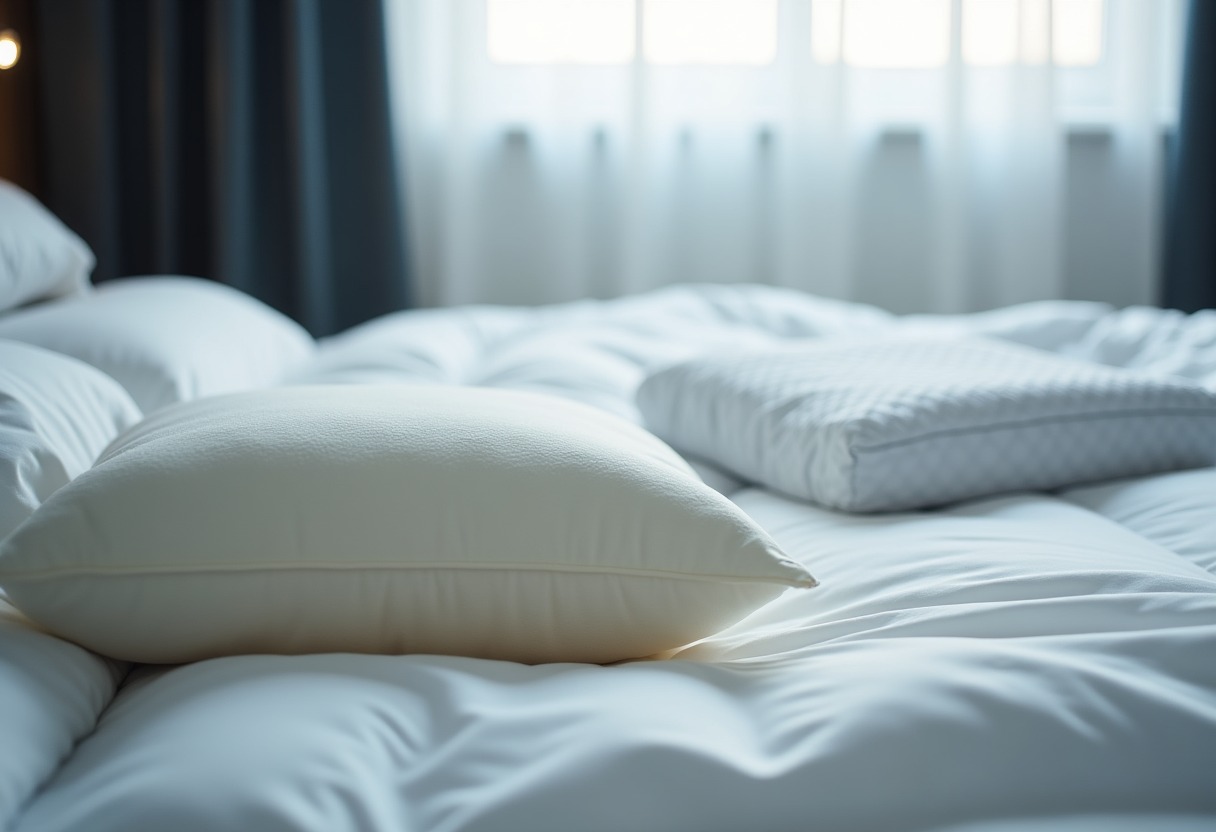
Memory foam pillows work best for side sleepers who need consistent neck support, but they trap heat and lose responsiveness over time. Latex and down alternative options provide better temperature regulation while maintaining support. The key lies in matching pillow height to shoulder width and sleep position rather than following material trends.
→ Shop memory foam pillows on Amazon
Cooling mattress toppers address the most common sleep complaint: overheating during the night. Gel-infused memory foam provides initial cooling but loses effectiveness as body heat saturates the gel beads. Phase-change materials maintain consistent temperature but cost significantly more. For most people, a simple bamboo fiber topper with good airflow delivers better results at lower cost.
→ Shop cooling mattress toppers on Amazon
Blackout curtains eliminate light pollution that disrupts melatonin production, but many options fail to block light at the edges. Thermal blackout curtains with wrap-around rods create complete darkness while providing temperature control benefits. The investment pays off immediately for anyone living near streetlights or early sunrise exposure.
Product Performance Comparison
| Product Category | Average Improvement | Price Range | Durability (Years) | Best For | |------------------|---------------------|-------------|-------------------|----------| | Blackout Curtains | 23 minutes additional sleep | $30-120 | 5-10 | Light-sensitive sleepers | | White Noise Machines | 18 minutes faster sleep onset | $25-80 | 3-7 | Urban noise environments | | Cooling Mattress Toppers | 15% fewer night wakings | $80-300 | 2-5 | Hot sleepers | | Ergonomic Pillows | 12% improved sleep quality | $40-150 | 2-4 | Neck pain sufferers |
Specific Product Recommendations
White noise machines that generate actual white noise (equal energy across all frequencies) work better than those playing nature sounds or pink noise variations. The Dohm mechanical models create consistent sound without electronic loops that your brain learns to ignore. Digital versions with multiple frequency options work well for masking specific noise types like traffic or neighbors.
→ Shop white noise machines on Amazon
Sleep masks need complete light blocking without pressure on the eyes or temples. Contoured masks that don't touch the eyelids prevent REM sleep disruption while blocking peripheral light. Silk and bamboo materials breathe better than synthetic options but require more careful washing.
Weighted blankets provide deep pressure stimulation that reduces cortisol levels, but the 10% of body weight rule doesn't apply to everyone. People with joint issues, circulation problems, or claustrophobia should start with lighter weights or skip weighted options entirely. Glass bead fill distributes weight more evenly than plastic pellets.
Temperature-regulating sheets made from eucalyptus (Tencel) or bamboo fiber wick moisture better than cotton while feeling softer than linen. Thread count matters less than weave type - percale weaves breathe better than sateen for hot sleepers. Quality sheets last 3-5 years with proper care versus 1-2 years for budget options.
Advanced Sleep Optimization Strategies
Room humidity between 30-50% prevents dry air sleep disruption without creating mold conditions. A quality humidifier pays for itself by reducing sinus congestion and throat irritation that cause sleep fragmentation. Avoid ultrasonic models that create white dust with hard water.
Blue light blocking glasses worn 2-3 hours before bedtime help maintain natural circadian rhythms, but they're unnecessary if you already use blackout curtains and limit screen time. The amber tint should block 99% of blue light wavelengths (400-490nm) to be effective.
Air quality affects sleep more than most people realize. Poor ventilation and airborne allergens cause micro-awakenings throughout the night. A quality air purifier with HEPA filtration reduces particulates that trigger breathing disruptions. For comprehensive air quality recommendations, check our guide on Best Air Purifiers Home 2026.
FAQ
Which type of pillow works best for different sleep positions? Side sleepers need firm, high-loft pillows that fill the gap between shoulder and neck, typically 4-6 inches thick depending on shoulder width. Back sleepers benefit from medium-support pillows around 3-4 inches thick that maintain the neck's natural curve without pushing the head forward. Stomach sleepers should use thin, soft pillows or no pillow at all to avoid neck strain, as thick pillows force the neck into unnatural positions that cause morning stiffness.
How do I know if a mattress topper will actually cool me down? Look for toppers with open-cell construction or ventilation holes that allow airflow, not just gel infusions that provide temporary cooling. Phase-change materials (PCMs) actively absorb and release heat to maintain consistent temperature but cost more upfront. Avoid memory foam toppers if you're a hot sleeper - they retain body heat regardless of cooling additives. Natural latex and wool toppers regulate temperature better than synthetic materials while providing adequate support.
Are expensive blackout curtains worth the extra cost? High-quality blackout curtains with thermal backing provide both light blocking and temperature control, making them worth the investment for most bedrooms. Cheap blackout curtains often have gaps at the edges, use thin backing that deteriorates quickly, or lack proper thermal properties. Measure your windows carefully and choose curtains that extend beyond the window frame by at least 3 inches on each side to prevent light leakage. Properly installed quality curtains last 7-10 years versus 2-3 years for budget options.
Do white noise machines actually improve sleep quality or just mask other problems? White noise machines specifically help people who are sensitive to inconsistent sounds like traffic, neighbors, or partner movement by creating a consistent auditory backdrop. They don't solve underlying sleep disorders like sleep apnea or restless leg syndrome, but they do reduce the number of times environmental sounds cause brief awakenings. The key is choosing a machine that produces true white noise rather than looped recordings that your brain eventually recognizes as patterns, which reduces effectiveness over time.
How often should I replace sleep products for optimal effectiveness? Pillows need replacement every 1-2 years regardless of material type, as they lose support and accumulate allergens that affect sleep quality. Mattress toppers last 2-5 years depending on material - memory foam degrades fastest while latex lasts longest. Sheets should be replaced every 3-5 years when the fibers break down and lose moisture-wicking properties. Sleep masks and blackout curtains can last 5+ years with proper care, while white noise machines typically function for 5-8 years before electronic components fail.
The best sleep products solve specific, measurable problems rather than promising vague comfort improvements - choose based on your primary sleep disruption, not marketing claims.
Some links on this page are affiliate links. We may earn a small commission if you purchase through them, at no extra cost to you.
As an Amazon Associate we earn from qualifying purchases. This article contains affiliate links; if you buy through them we may earn a small commission at no additional cost to you.