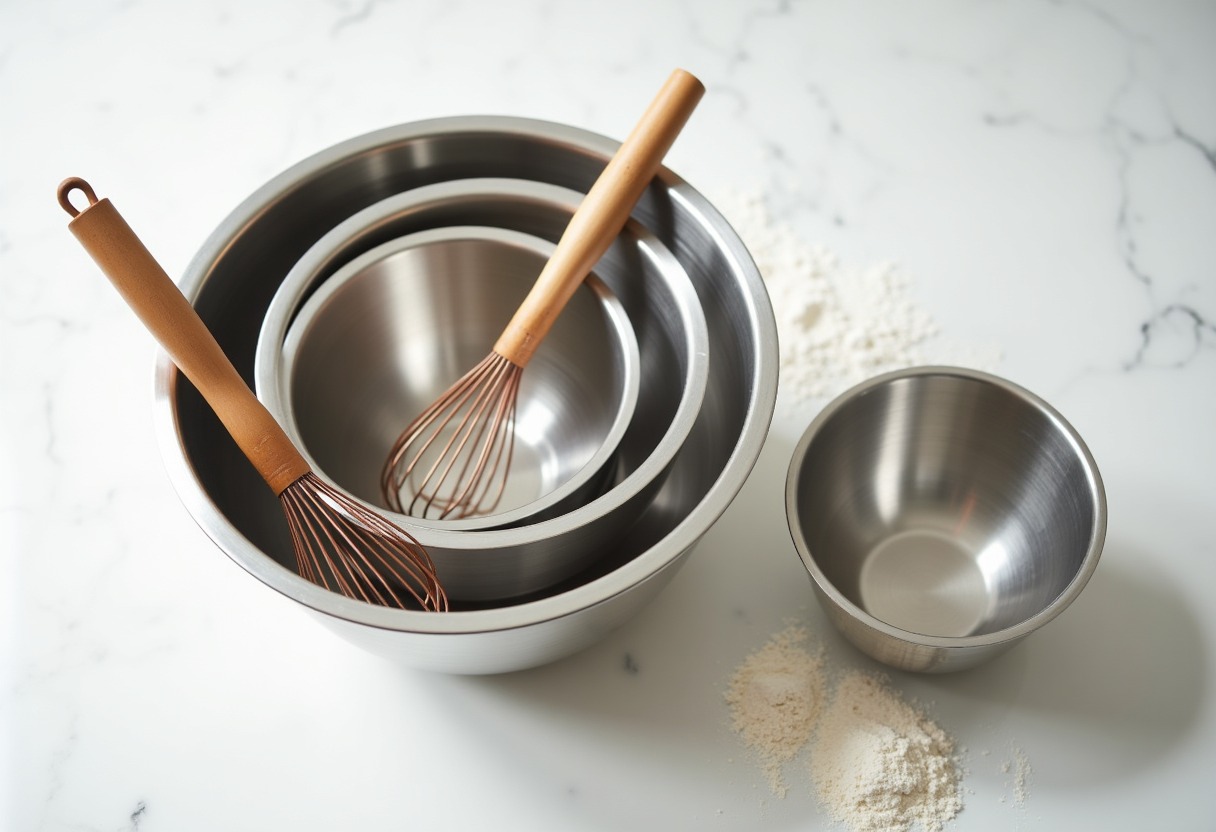
Most mixing bowls either slide across the counter when you're whisking or take up half your cabinet when stored. The best stainless steel mixing bowls fix both problems while lasting decades longer than glass or plastic alternatives.
Why Stainless Steel Beats Other Bowl Materials
Stainless steel is non-reactive, meaning it won't absorb flavors, leach chemicals, or react with acidic ingredients like lemon juice or tomatoes. Glass bowls chip and shatter. Plastic stains, scratches, and eventually harbors bacteria in those micro-grooves. Ceramic looks nice but weighs too much for everyday use.
Steel bowls weigh just enough to stay planted during heavy mixing but remain light enough to maneuver one-handed when pouring batter. They survive drops onto tile floors, go from freezer to counter without cracking, and nest tightly to reclaim cabinet space. Professional kitchens rely on → Shop restaurant-grade mixing bowls on Amazon for exactly these reasons.
The metal conducts temperature efficiently, which matters more than most home cooks realize. Chilled steel bowls keep butter cold when making pastry dough. Room-temperature bowls won't shock egg whites you're whipping to stiff peaks. Unlike glass or ceramic that retain heat or cold for too long, steel adjusts quickly to your kitchen environment.
What Separates Good Steel Bowls from Great Ones
Gauge thickness determines durability and noise. 18-gauge steel (1mm thick) provides the sweet spot between rigidity and weight. Thinner bowls dent easily and sound tinny when a whisk hits the side. Thicker bowls add unnecessary heft without performance benefits.
Mirror-polished interiors look impressive but scratch easily and show water spots. Satin finishes hide wear better while remaining just as easy to clean. The exterior finish matters less unless you're particular about aesthetics—focus on what touches your food.
Rolled rims prevent sharp edges and add structural strength. Flat rims bend and distort over time. A proper rolled edge makes pouring cleaner and gripping more comfortable when you're tilting a full bowl.
Base design determines whether bowls stay put or skate around. Silicone rings work better than rubber feet, which dry out and fall off. Some quality sets skip the grippy base entirely and rely on weight distribution—this works if the bowl has a proper flat bottom, not a wobbly rounded one.
Nesting efficiency matters if you're buying a set. Bowls should stack with minimal gap between sizes. Poorly designed sets waste six inches of vertical cabinet space. The → Shop nesting prep bowls on Amazon worth buying nest so tightly they feel like a single bowl until you separate them.
Size Strategy for Different Tasks
| Bowl Size | Best Uses | Why This Size Matters | |-----------|-----------|----------------------| | 1-2 quart | Whisking eggs, small batches, prep mise en place | Big enough for three eggs, small enough to handle one-handed | | 3-4 quart | Standard mixing, salad dressing, marinating proteins | The workhorse size for most home baking and cooking tasks | | 5-6 quart | Bread dough, large salads, batch cooking | Provides room for folding without flour spilling over the rim | | 8+ quart | Turkey brining, party-size salads, proofing large doughs | Replaces specialty items if you have the storage space |
Most households need at least three sizes. Two small bowls handle prep work—one for minced garlic, one for measured flour. One medium bowl tackles everyday mixing. One large bowl covers bread baking and meal prep for the week. If you regularly cook for gatherings, add an extra-large bowl.
The 1.5-quart bowl gets more use than you'd expect. It's perfect for whisking vinaigrettes, beating two eggs for French toast, or holding chopped herbs while you cook. Don't skip the smallest size in a set.
Our Top Picks for Different Kitchen Priorities
Best Overall Set: The Vollrath Economy stainless steel bowl set delivers restaurant durability at home-cook prices. These are actual 18-gauge steel bowls used in commercial kitchens, not consumer-grade lookalikes. They nest perfectly, survive dishwasher abuse, and the 1.5, 3, 5, and 8-quart sizing covers every common task. No silicone bases—these rely on weight and proper flat bottoms, which works if your counters are level.
→ Shop stainless steel mixing bowl set on Amazon
Best for Stability: Cuisinart's silicone-base bowl set solves the sliding problem without adding much cost. The silicone rings stay attached through years of washing, and the bowls themselves match commercial-grade thickness. The set includes 1.5, 3, and 5-quart sizes—skip the separate 2.75-quart bowl unless you need that exact capacity. These pair well with the Best Dutch Ovens Everyday Cooking Baking for a complete baking setup.
Best with Lids: FineDine's stainless steel bowl set includes matching airtight lids for each size. The lids aren't microwave-safe (they're steel), but they transform mixing bowls into storage containers for prepped ingredients or leftovers. The bowls themselves are slightly lighter gauge than commercial options—fine for home use, but they'll dent if dropped on a hard floor. These work particularly well alongside tools from our Best Amazon Kitchen Gadgets 2026 guide.
→ Shop metal mixing bowls with lids on Amazon
Best Budget Option: The Wildone stainless steel bowl set costs about half what commercial sets run while maintaining decent quality. These are thinner gauge steel that dents more easily, but the nesting design works well and the mirror finish looks sharp when new. Buy these if you're outfitting a first apartment or rental kitchen where durability matters less than upfront cost.
Best for Serious Bakers: The Artisan 13-quart stainless steel bowl handles bulk bread dough, pizza dough for multiple pies, or enough cookie dough for a month of freezer stock. Restaurant kitchens use these for proofing large batches. Home bakers who mix five-pound flour recipes need this capacity. Store it inside your oven when not in use—it's too big for most cabinets. Pairs naturally with equipment from Kitchen Foundations for building a proper baking setup.
→ Shop non-slip base mixing bowls on Amazon
What Most Bowl Reviews Miss
Pouring spouts are marketing gimmicks. A properly rolled rim creates a natural pour point anywhere on the circumference. Dedicated spouts just collect dried batter and complicate cleaning.
Measurement markings stamped into steel wear off or become illegible within months. Use measuring cups for precision work. Bowls are for mixing, not measuring.
Handle-style bowls work for stand mixer attachment but add bulk for hand storage. Only buy handled bowls if you specifically need to lock them onto a mixer base. For hand mixing and general prep, handleless bowls stack tighter and weigh less.
The "flat base for stand mixer" feature matters only if you own a stand mixer and regularly use the bowl as a double boiler over simmering water. Most people never do this. Standard rounded bottoms work fine for everything else.
Dishwasher-safe means different things for different finishes. All stainless steel survives dishwashers, but mirror finishes show water spots and scratches more obviously after repeated cycles. Satin finishes maintain appearance better. Silicone bases handle dishwashers without degrading, while rubber feet often fail within a year of regular machine washing.
Matching Bowls to Your Kitchen Style
Nesting bowls work best in kitchens with limited cabinet space—apartments, galley kitchens, or shared housing where every cubic inch counts. They're also ideal if you prefer visual minimalism and don't want multiple bowls cluttering counters between uses.
Individual bowls make sense if you have ample storage and frequently need multiple sizes simultaneously. Meal preppers who chop five vegetables at once or bakers who separate wet and dry ingredients appreciate having several bowls in use without unstacking a nested set.
Consider your primary use case. If you bake bread weekly, prioritize a larger 6-8 quart bowl over accumulating small sizes. If you meal prep salads and grain bowls, focus on the 3-5 quart range. Match your bowl collection to your actual cooking patterns rather than buying sets with sizes you'll never use.
Weight matters more than reviews acknowledge. Heavier bowls stay planted during vigorous mixing but tire your arms during extended whisking. Lighter bowls require anchoring with a damp towel underneath but strain your wrists less. Test the weight-to-stability ratio by holding a similar bowl at the store before committing.
FAQ
Do stainless steel bowls react with acidic foods like glass bowls? No. Stainless steel is chemically inert and won't react with acids, unlike aluminum or copper. You can marinate chicken in lemon juice overnight or whisk vinegar-based dressings without any metallic taste or discoloration. This makes steel more versatile than reactive metals for prep work.
Can you put stainless steel bowls in the microwave? Never. Metal reflects microwaves and can spark or damage your microwave. Transfer food to glass or ceramic for reheating. This limitation only matters if you regularly use mixing bowls as storage containers—otherwise you're not microwaving mixing bowls anyway.
How do you prevent stainless steel bowls from sliding during mixing? Place a damp kitchen towel underneath the bowl, or buy bowls with silicone bases. The towel method works instantly with any bowl and costs nothing. Silicone-base bowls eliminate this step but cost slightly more and the rings can fail over years of use.
What's the difference between 18/8 and 18/10 stainless steel? The numbers indicate chromium and nickel content. 18/10 (18% chromium, 10% nickel) resists corrosion slightly better and has a brighter finish than 18/8 (18% chromium, 8% nickel). For mixing bowls, the difference is negligible—both grades last decades with normal use and cleaning.
Are stainless steel bowls safe for serving food? Completely safe. Steel doesn't leach chemicals, withstands acidic and alkaline foods, and cleans to true sanitary condition. Restaurants serve everything from salads to desserts in stainless bowls. The only downside is steel conducts heat, so hot soups or chilled items warm up or cool down faster than in insulated containers.
The Right Bowls Transform Kitchen Efficiency
Stainless steel mixing bowls outlast every other kitchen tool you'll buy, nest away without wasted space, and handle tasks from whisking egg whites to proofing bread dough without complaint.
Some links on this page are affiliate links. We may earn a small commission if you purchase through them, at no extra cost to you.
As an Amazon Associate we earn from qualifying purchases. This article contains affiliate links; if you buy through them we may earn a small commission at no additional cost to you.