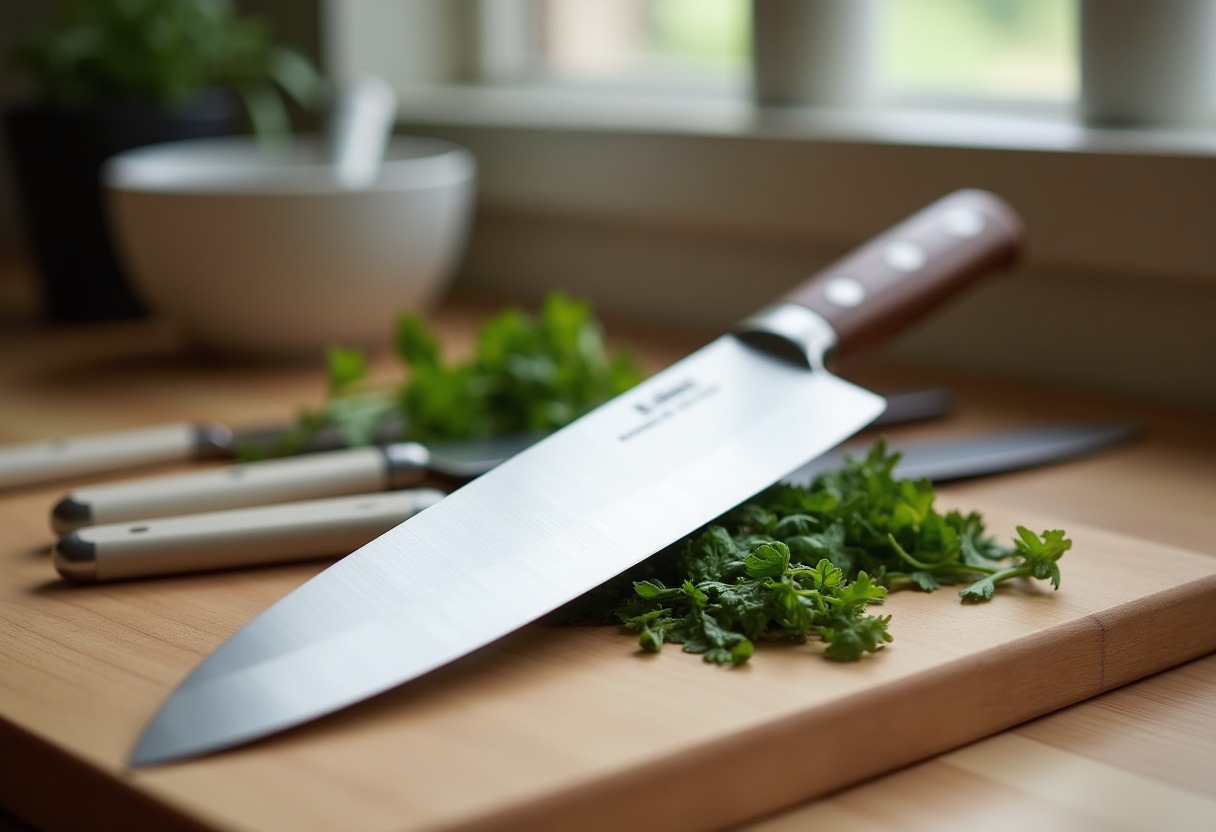
Most knife sets collect dust after the first month because they're designed for display, not the relentless work of actual cooking. You need blades that hold an edge through weeknight dinners, handle awkward butternut squash without chipping, and feel balanced enough that prep work doesn't wreck your wrist.
What Separates Working Knives from Kitchen Decorations
The gap between marketing and performance is massive in knife sets. Blade steel matters more than brand prestige. German high-carbon stainless (typically HRC 56-58 on the Rockwell hardness scale) resists corrosion and forgives improper cutting surfaces. Japanese VG-10 or AUS-10 steel (HRC 60-62) holds a sharper edge longer but chips more easily against bones or frozen foods.
Full tang construction—where the blade steel extends through the entire handle—determines whether a knife survives years of use or separates at the bolster after six months. Partial tang knives feel lighter initially but fail under torque when breaking down poultry or dense vegetables.
Handle ergonomics get ignored in most reviews, but your grip pressure increases 40% when knives aren't properly balanced. Triple-riveted handles distribute stress better than molded ones. Pakkawood and micarta resist moisture better than traditional hardwood, which swells and cracks with repeated washing.
The Three Knife Philosophies That Actually Matter
German-style sets prioritize durability and versatility. Heavier blades with gentler edge angles (20-22 degrees per side) push through tough ingredients. Wüsthof and Zwilling produce the reference standard here—knives that perform identically in year five as year one with basic maintenance.
Japanese-style sets sacrifice some toughness for precision. Thinner blades at 15-degree angles glide through proteins and vegetables with less cellular damage, keeping cut surfaces fresher longer. Shun and Miyabi dominate this category, though their knives require more careful technique.
Hybrid designs blend German weight with Japanese sharpness. These work best for home cooks who want versatility without maintaining separate Eastern and Western knife techniques. Mercer and Victorinox produce exceptional hybrid sets at significantly lower price points than heritage brands.
Your cutting surface dictates which philosophy works best. End-grain wood boards preserve any edge style. Bamboo and epicurean boards dull Japanese knives noticeably faster. Glass and ceramic boards destroy all knives equally and should be avoided entirely. If you're building a complete kitchen foundation, check our guide on Best Amazon Kitchen Gadgets 2026 for compatible prep tools.
Essential Knife Collection vs. Bloated Sets
| Set Size | Core Knives Included | Typical Fillers | Best For | |----------|---------------------|-----------------|----------| | 3-piece starter | 8" chef, 3.5" paring, honing steel | None | Learning technique, small kitchens | | 7-piece standard | 8" chef, 6" utility, 3.5" paring, kitchen shears, honing steel, block | Steak knives (rarely matched quality) | Most home cooks, daily use | | 15-piece "complete" | Core 7 + bread knife, boning knife, 6 steak knives | Specialty knives you'll use twice, cheap steak knives | Large households, frequent entertaining | | 20+ piece sets | Everything above | Tomato knives, cheese knives, pizza cutters | Skip entirely—quality drops dramatically |
The actual workhorses in any collection are the chef's knife and paring knife. Everything else gets used 10% as often. Sets that pad numbers with mismatched steak knives or novelty blades compromise core knife quality to hit price points.
A seven-piece set provides the right balance. You gain a utility knife for medium tasks and kitchen shears for packages and herbs, without paying for tools that occupy drawer space. Block storage protects edges better than in-drawer solutions, though magnetic strips work well if you have the wall space.
→ Shop kitchen knife set with block on Amazon
Knife Sets That Survive Real Kitchens
For daily cooking across all techniques: German forged sets with full bolsters handle everything from delicate herbs to frozen chicken. The weight does the work—you guide rather than force. Expect to sharpen quarterly with normal use, more often if you're cooking daily for a family. These knives develop a patina that indicates proper care rather than neglect.
For precision cuts and Asian cuisine: Japanese stamped sets with thinner profiles excel at vegetables, fish, and boneless proteins. The lighter weight reduces fatigue during extended prep sessions. You'll notice the difference immediately when slicing tomatoes or portioning raw fish. Avoid bones and frozen items entirely. Sharpening frequency increases to monthly, but the process is faster with softer steel.
For tight budgets without compromising performance: Restaurant supply brands like Mercer Culinary and Victorinox Fibrox produce knives that professional kitchens replace every 18-24 months. Home use extends that timeline to 5-7 years. The handles feel utilitarian rather than luxurious, but blade geometry and steel quality match knives costing three times more.
→ Shop german steel chef knife on Amazon
For hybrid versatility: Mid-range Japanese brands like Shun Elements or MAC combine accessible price points with legitimate performance. These work particularly well if you already own quality cookware—check our Best Cast Iron Pans Everyday Cooking guide—and want knives that match that investment level.
For minimalist kitchens: Three-piece sets from reputable manufacturers outperform bloated fifteen-piece collections. A quality 8-inch chef's knife handles 80% of kitchen tasks. Add a paring knife and honing steel, then invest the savings in proper sharpening equipment or a cutting board that won't destroy your edges.
→ Shop japanese santoku knife on Amazon
Maintenance Reality Most Reviews Skip
Honing and sharpening are different processes. Honing realigns the existing edge—do this weekly. Sharpening removes steel to create a new edge—do this quarterly to annually depending on use frequency. Sets that include a honing steel but no instructions on proper technique set you up for frustration.
Hand washing is non-negotiable for quality knives. Dishwasher heat cycles degrade handle adhesives and dull edges through contact with racks and other items. The thirty seconds of hand washing per knife extends lifespan by years.
Storage determines how long knives maintain factory sharpness. Blocks keep edges separated. Magnetic strips work well but require careful placement—dropping a knife from wall height can chip or crack the blade. In-drawer storage with blade guards is acceptable for occasional-use knives but risks damage to daily drivers.
Most home cooks benefit from professional sharpening annually, with DIY honing between services. The cost runs $3-7 per knife, less than the performance loss from working with dull blades. If you're committed to learning sharpening, whetstones provide better results than pull-through sharpeners, which remove excessive steel and create uneven edges.
→ Shop knife sharpening steel on Amazon
Advanced Selection Factors Professional Reviews Miss
Handle-to-blade weight ratio affects cutting fatigue more than total knife weight. German knives front-load weight at the bolster, using momentum for tough cuts. Japanese knives balance at the handle-blade junction, requiring more controlled technique. Try the pinch grip (thumb and forefinger on the blade, not the handle) before buying—if the knife tips forward or back, the balance is wrong for your hand size.
Bolster design impacts sharpening longevity. Full bolsters protect your fingers but prevent sharpening the entire blade edge over time. Half bolsters or bolsterless designs allow complete edge access. The first style lasts longer initially; the second maintains peak performance through more sharpening cycles.
Tang visibility indicates construction quality even in budget sets. You should see the steel outline through the handle material. Molded plastic handles that completely conceal the tang often hide partial tang construction, which fails under stress.
Set composition flexibility matters for long-term value. Can you replace individual knives if one breaks or gets lost? Sets from major manufacturers allow this. Generic sets force complete replacement when a single knife fails.
→ Shop paring knife set on Amazon
FAQ
How much should you spend on a knife set for regular home cooking?
Expect to invest $150-300 for a quality seven-piece set that performs reliably for 5-10 years. Below $150, manufacturers compromise on steel quality or tang construction to hit price points. Above $300, you're paying for brand heritage and materials upgrades (exotic handle woods, Damascus patterns) that don't improve cutting performance. The sweet spot prioritizes blade geometry and heat treatment over aesthetics. If you cook daily, this investment costs less per meal than a single restaurant dinner over its lifespan.
Do expensive knife sets actually cut better than budget options?
Cutting performance depends on edge geometry and current sharpness, not price. A freshly sharpened $40 Victorinox performs identically to a $200 Wüsthof on a cutting board. The difference emerges over months—premium steel holds that edge 2-3 times longer between sharpenings, and superior heat treatment resists chipping. Handle ergonomics affect fatigue during extended use. Budget sets work fine for occasional cooks; daily users notice the durability and comfort advantages of mid-range options within weeks.
Should you buy a complete set or build a collection individually?
Sets offer better value if you need multiple knives immediately and the composition matches your cooking style. Building individually costs 30-40% more but ensures every knife gets chosen for specific tasks you actually perform. Most home cooks benefit from buying a quality chef's knife individually ($70-120), then adding a matching paring knife and honing steel as budget allows. This approach prevents paying for specialty knives that occupy drawer space unused. Complete sets make sense when moving into a first kitchen or replacing worn-out knives all at once.
How do you know when it's time to replace rather than sharpen knives?
Replace knives when the blade develops a pronounced curve from repeated sharpening, the handle shows cracks or looseness, or chips in the edge extend deep enough that removal would alter blade profile. Surface rust responds to cleaning and oil; pitting that penetrates the steel indicates replacement time. Most quality knives withstand 15-20 years of home use with proper maintenance. Budget knives show these failure signs in 3-5 years. If sharpening no longer restores cutting performance, the steel has lost its temper from improper use (cutting frozen items, dishwasher heat) and won't hold an edge regardless of sharpening skill.
What's the actual difference between forged and stamped knives?
Forged knives start as heated steel that gets shaped under pressure, creating denser grain structure and typically including a bolster. Stamped knives get cut from steel sheets like cookie cutters, then ground and heat-treated. Forged knives traditionally offered superior durability, but modern stamped knives from quality manufacturers perform nearly identically after heat treatment. Forged knives feel heavier and more substantial; stamped knives offer lighter weight and lower prices. For home use, heat treatment quality and steel composition matter more than manufacturing method. Japanese knives are often stamped yet outperform forged European knives in edge retention.
The Edge Retention Test Nobody Talks About
Quality knife sets reveal themselves through sustained performance, not initial sharpness out of the box. Any manufacturer can deliver a razor edge on day one—what matters is how that edge holds through fifty onions, twenty chickens, and countless tomatoes before requiring attention.
Some links on this page are affiliate links. We may earn a small commission if you purchase through them, at no extra cost to you.
As an Amazon Associate we earn from qualifying purchases. This article contains affiliate links; if you buy through them we may earn a small commission at no additional cost to you.