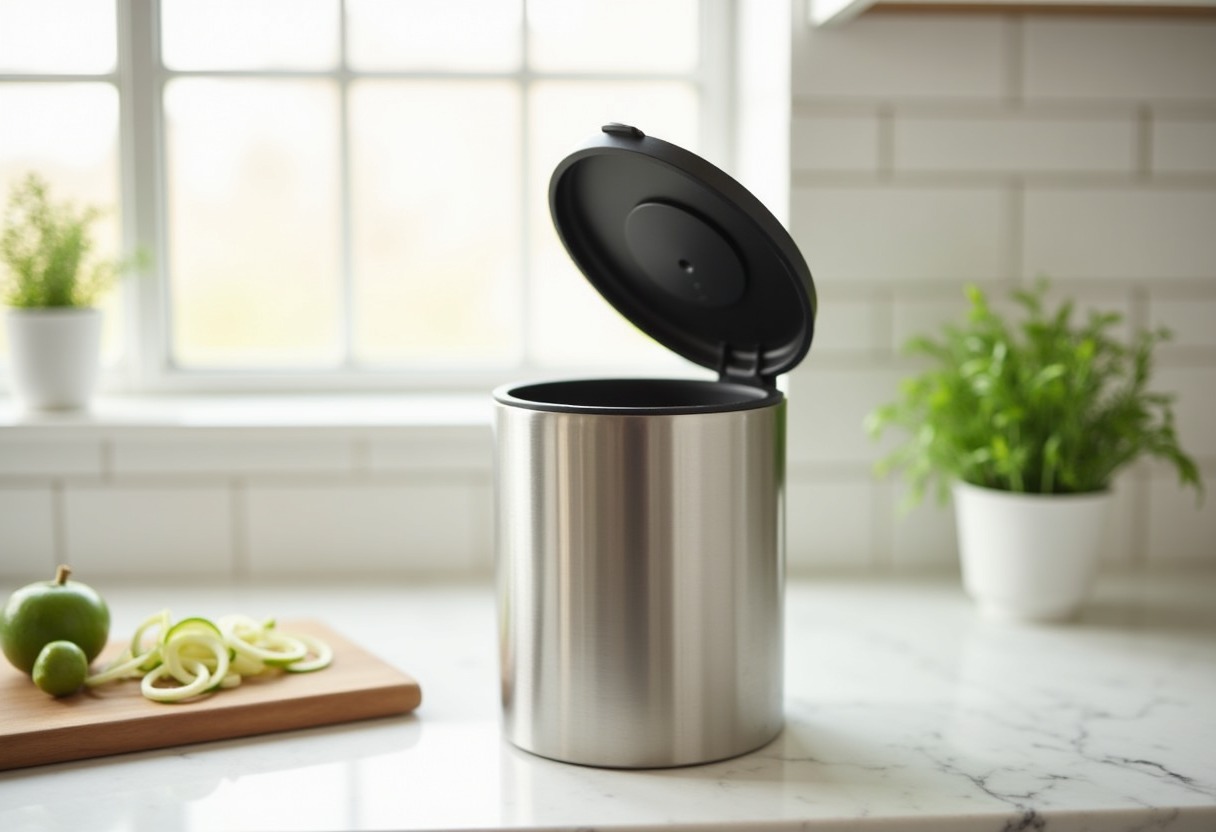
The average American household throws away roughly 30% of the food they purchase, and most of that ends up in landfills where it produces methane rather than enriching soil. A properly chosen kitchen compost bin makes collecting scraps so convenient you'll actually use it every day, turning what would become waste into garden gold.
Why Kitchen Compost Bins Actually Matter
According to the EPA, food scraps and yard waste make up 30% of what we throw away. When organic matter decomposes in oxygen-starved landfills, it releases methane—a greenhouse gas 25 times more potent than carbon dioxide. Composting those same materials aerobically produces minimal methane and creates nutrient-rich soil amendment.
The barrier isn't philosophy—most people support composting in theory. The problem is execution. Scraps in an open bowl attract fruit flies. A poorly sealed container smells like decay within 48 hours. Bins placed under the sink get forgotten and become biohazard zones. The right countertop solution solves these friction points by staying visible, accessible, and genuinely odor-controlled.
Kitchen composting also changes how you think about waste. Once you start separating scraps, you notice how much perfectly good material you've been sending to landfills. Coffee grounds, vegetable peels, eggshells, tea bags—these all become resources instead of garbage. If you're already upgrading your kitchen setup with items from our Best Amazon Kitchen Gadgets 2026 guide, adding a compost bin completes the sustainability picture.
What Makes a Kitchen Compost Bin Actually Work
The difference between a bin you'll use daily and one that ends up in the garage comes down to four factors: seal quality, material durability, size appropriateness, and filter effectiveness.
Seal quality determines whether your kitchen smells like a normal kitchen or a decomposition experiment. Rubber gaskets work better than simple lid-on-rim designs. Hinged lids with clasps create tighter seals than friction-fit tops. The best bins create a near-airtight environment that traps odor molecules inside.
Material choice affects both longevity and cleaning ease. Stainless steel resists staining and doesn't absorb odors into the material itself. Ceramic looks elegant but chips if dropped. Plastic is lightweight and inexpensive but can retain smells over time, even after washing. Powder-coated steel offers a middle ground—more scratch-resistant than bare steel, less sterile-looking than polished stainless.
Capacity should match your household's scrap generation and compost-emptying frequency. A 0.8-gallon bin works for singles or couples who empty every two days. Families of four typically need 1.3 to 1.8 gallons to make it through a week. Undersizing means constant trips to your outdoor compost pile or bin. Oversizing means scraps sit longer, increasing the chance of smell breakthrough even with good filters.
Activated charcoal filters absorb volatile organic compounds that create composting odors. They typically last four to six months with normal use. Bins with replaceable filters beat "lifetime" filter claims—all carbon eventually saturates. The filter should sit in the lid, not the base, since odorous gases rise.
Compost Bin Styles Compared
Different designs suit different kitchen workflows and aesthetic preferences. Here's how the main categories stack up:
| Style | Pros | Cons | Best For | |-------|------|------|----------| | Stainless Steel Pail | Durable, doesn't absorb odors, dishwasher-safe, charcoal filter compatible | Shows fingerprints, can dent if dropped, industrial look doesn't suit all kitchens | High-volume composters who prioritize function and easy cleaning | | Ceramic Crock | Aesthetically pleasing, heavy base stays put, available in colors that match décor | Chips if knocked over, heavier to carry when emptying, typically more expensive | Style-conscious kitchens, people who want the bin to stay visible on the counter | | Sealed Plastic Container | Lightweight, affordable, wide range of sizes and colors | Can absorb odors over time, less durable, cheaper models crack at handle attachment points | Budget-conscious households, renters, people testing composting before investing | | Bamboo/Wood Exterior | Natural aesthetic, often combined with plastic insert, eco-friendly material choice | Exterior can warp with moisture exposure, typically lacks tight seal, requires more maintenance | Eco-conscious buyers prioritizing appearance in low-scrap-volume households |
The → Shop countertop compost bin on Amazon search shows the full range, but most serious composters end up with either stainless steel or ceramic for long-term reliability.
The Kitchen Compost Bins Worth Buying
For most households: Stainless Steel with Charcoal Filter
The 1.3-gallon stainless steel pail with a vented charcoal filter lid hits the sweet spot of capacity, odor control, and durability. Look for models with a bail handle for easy carrying and a wide opening that accommodates large vegetable trimmings without requiring you to break them down first. The powder-coated versions resist fingerprints better than polished stainless while maintaining the same odor-resistance. Replacement filters cost about $8-12 for a multi-pack and should be changed every four to six months depending on volume. → Shop stainless steel compost pail on Amazon.
For style-focused kitchens: Ceramic Compost Crock
A 1-gallon ceramic crock with a tight-fitting lid and charcoal filter looks like a decorative kitchen container rather than a waste receptacle. The weight keeps it stable when you're scraping plates or trimming vegetables directly over the opening. Glazed ceramic wipes clean easily and won't hold onto residual smells like porous materials can. The trade-off is fragility—drop it once and you're buying a replacement. Models with a bamboo spoon holder or integrated notch for hanging your compost bag add functionality. → Shop ceramic compost crock on Amazon.
For high-volume composters: Large-Capacity Sealed Bucket
Families generating serious scrap volume need 2.4 to 3-gallon capacity with a locking lid. These larger bins typically use a clamp-down lid with a rubber gasket rather than a simple friction fit. The seal quality matters more at this size because contents sit longer between emptying trips. Look for a side carry handle in addition to the top bail—the weight of a full 3-gallon bin makes a single handle uncomfortable. These work especially well if you're also vermicomposting or using a Best Non Toxic Cookware Sets approach that generates more vegetable prep waste. → Shop compost bucket with lid on Amazon.
For minimalists: Hanging Compost Bag Holder
If counter space is tight, a wall-mounted or under-sink bag holder with a removable inner liner offers a different approach. You hang a compostable bag inside the frame and swap the whole bag when full. No washing the bin itself, no filter changes. The downside is visibility—out of sight often means out of mind, and under-sink bins get neglected. This works best for people with established composting habits who don't need the visual reminder.
Replacement filter packs
Whatever bin style you choose, stock up on replacement charcoal filters. They're inexpensive insurance against odor breakthrough. Most bins use standard 6-inch round filters, though some ceramic crocks need oval or rectangular shapes. Buying a year's supply at once (two to three filter packs) saves money versus single replacements. → Shop compost bin charcoal filters on Amazon.
What Most Guides Won't Tell You About Kitchen Composting
Pre-freezing changes everything for meat and dairy
If you compost meat scraps, fish bones, or dairy (only advisable with hot composting systems), freeze them in a small container before adding to your kitchen bin. Even the best filters struggle with animal protein decomposition odors. Frozen scraps go straight from freezer to outdoor compost pile, bypassing your kitchen bin entirely for the odorous materials while still diverting waste from landfills.
Layering matters inside the bin
Most people dump scraps randomly, creating a wet mush that smells worse than it should. Layer high-nitrogen materials (fruit and vegetable scraps) with high-carbon materials (paper towels, napkins, egg cartons torn into small pieces). The carbon layers absorb excess moisture and create air pockets that reduce anaerobic decomposition—the main source of bad smells. Keep a small jar of sawdust, shredded newspaper, or dried leaves next to your bin and add a handful after each layer of wet scraps.
The two-bin rotation system eliminates gaps
Buy two bins instead of one. When you take the full bin outside to empty, the second one is ready on your counter. No half-hour gap where you're setting scraps on a plate or paper towel because your bin is outside being washed. The rotation system also lets bins air-dry completely between uses, preventing the mildew smell that plagues bins returned to service while still damp. This pairs well with organizational systems from Kitchen Foundations.
Your bin placement affects fruit fly problems more than the bin itself
Fruit flies don't usually breed in sealed compost bins—they breed in the fruit bowl sitting three feet away. Adult flies lay eggs on ripening fruit, and those larvae eventually find their way to your compost. Move your fruit bowl farther from the compost bin and store ripe bananas in the refrigerator to break the breeding cycle. If flies persist, a small Best Air Purifiers Home 2026 unit on the counter helps since many include UV lights that attract and trap flying insects.
Winter composting requires strategy
If your outdoor compost pile freezes solid for months, your kitchen bin becomes a throughput bottleneck. Options: designate a covered bucket outside specifically for winter storage that you'll turn into the main pile come spring, sign up for municipal compost pickup if available, or reduce scrap volume by being more intentional about meal planning. Some households run a small vermicomposter indoors during winter months, turning kitchen scraps into finished compost in 60-90 days without going outside.
FAQ
How often should I empty my kitchen compost bin?
Every two to four days for most households. Daily if you're adding meat or dairy scraps. Weekly maximum if you're only composting vegetable matter and coffee grounds. Longer intervals overwhelm even the best charcoal filters and risk mold growth inside the bin.
Can I compost meat, dairy, and oils in a kitchen compost bin?
Yes, but only if your outdoor system can handle it—hot composting or municipal programs that accept all organics. Backyard cold composting shouldn't include animal products due to pest attraction. In your kitchen bin, these materials create stronger odors, so smaller batch sizes and more frequent emptying become necessary.
Do compost bins really prevent odors or is that marketing?
Quality bins with tight seals and fresh charcoal filters genuinely control odor for two to four days with typical household scraps. After day five or six, you'll notice smell breakthrough regardless of bin quality. Odor control is real but not magic—you still need to empty regularly and replace filters every few months.
What size compost bin does a family of four need?
A 1.5-gallon bin for a family that empties twice weekly, or a 2.5 to 3-gallon bin if you prefer weekly trips to the outdoor compost pile. Families cooking most meals at home generate more scraps than those eating out frequently, so adjust based on your actual patterns rather than household size alone.
Should I line my compost bin with bags or go bagless?
Bagless is easier and creates less waste, but requires washing the bin after each emptying. Compostable bags work if your outdoor system breaks them down, though many home composters find they don't decompose quickly enough. Regular plastic bags defeat the purpose entirely. Most dedicated composters go bagless with a quick rinse after dumping.
Making It Stick
A kitchen compost bin only reduces waste if you actually use it, which means choosing one that fits your space, capacity needs, and aesthetic tolerance rather than buying whatever looks good in a photo.
Some links on this page are affiliate links. We may earn a small commission if you purchase through them, at no extra cost to you.
As an Amazon Associate we earn from qualifying purchases. This article contains affiliate links; if you buy through them we may earn a small commission at no additional cost to you.