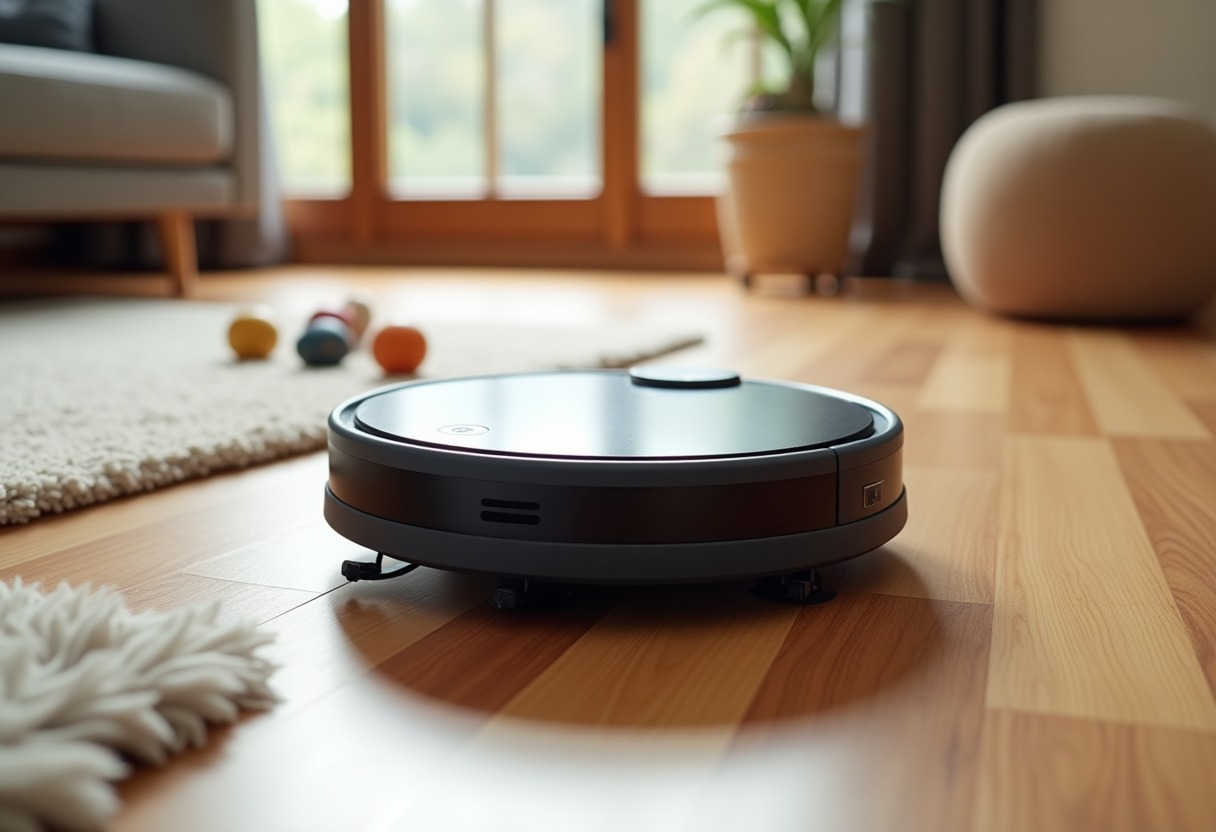
Pet hair clings to everything, and manual vacuuming feels endless when you have furry companions shedding across carpets, hardwood, and tile daily. Modern robot vacuums equipped with specialized brushes, powerful suction, and smart mapping technology can autonomously tackle this challenge while you handle other priorities.
Why Pet Hair Demands Specialized Robot Vacuum Technology
Pet hair presents unique challenges that separate effective robot vacuums from mediocre ones. Unlike regular debris, pet hair wraps around brush rolls, embeds deep in carpet fibers, and scatters across multiple surface types throughout your home. Consumer Reports testing shows that robot vacuums with dual rubber brushes remove 90% more pet hair than single-brush models on medium-pile carpets.
The best performers combine high-efficiency particulate air (HEPA) filtration with rubber brush systems that resist hair tangles. Traditional bristle brushes wrap with pet hair within minutes, requiring frequent maintenance breaks. Rubber brushes flex and maintain contact with surfaces while directing hair into the suction pathway rather than creating knots.
Multi-surface homes add another layer of complexity. Hair that scatters across hardwood requires different suction settings than hair embedded in area rugs. Smart mapping technology allows modern robot vacuums to remember surface types and adjust power automatically, ensuring consistent cleaning without manual intervention.
Essential Features for Pet Hair Robot Vacuums
Suction power measured in pascals (Pa) directly correlates with pet hair pickup efficiency. Entry-level models provide 600-1000 Pa, adequate for light shedding on hard surfaces. Heavy shedders like German Shepherds or Golden Retrievers demand 2000+ Pa suction to extract hair from carpet pile effectively.
Brush design matters more than raw power for tangle prevention. Counter-rotating rubber brushes work opposite directions, creating a flossing action that loosens embedded hair while preventing wrap-up. Some manufacturers add side brushes with rubber fins instead of bristles, extending this tangle-resistance to edge cleaning along baseboards where pet hair accumulates.
HEPA filtration captures allergens released during hair pickup, crucial for households with sensitivities. True HEPA filters remove 99.97% of particles 0.3 microns or larger, including pet dander that becomes airborne during vacuuming. This feature connects well with whole-home air quality improvements, much like selecting the right Best Air Purifiers Home 2026 for comprehensive allergen management.
Battery runtime determines coverage area per cleaning cycle. Standard lithium-ion batteries provide 60-90 minutes, sufficient for 1000-1500 square feet. Larger homes benefit from auto-recharge functionality that returns robots to base stations, recharges, then resumes cleaning from interruption points.
Multi-Surface Cleaning Performance Comparison
| Feature | Budget Models ($150-300) | Mid-Range ($300-600) | Premium ($600-1200) | |---------|--------------------------|---------------------|-------------------| | Suction Power | 600-1000 Pa | 1500-2000 Pa | 2000-3000+ Pa | | Brush Type | Single bristle | Dual rubber | Dual rubber + side | | Surface Detection | Manual settings | Basic sensors | Smart mapping | | Self-Emptying | No | Optional | Standard | | HEPA Filtration | Basic filters | True HEPA available | Multi-stage HEPA | | Runtime | 60-75 minutes | 90-120 minutes | 120-180 minutes |
Budget models handle light pet hair on primarily hard surfaces but struggle with carpeted areas. The jump to mid-range units brings dual brush systems and improved suction that tackles moderate shedding across mixed surface homes. Premium models add self-emptying bases that store weeks of debris, reducing maintenance to monthly tasks.
Smart mapping separates good robot vacuums from great ones for multi-surface homes. Advanced models create detailed floor plans, remembering carpet locations for increased suction and hardwood areas for optimized speed settings. This intelligence prevents the inefficient random patterns that leave pet hair concentrated in corners and under furniture.
Top Robot Vacuum Categories for Pet Hair
Dual-Brush Self-Emptying Models excel for heavy shedders across mixed flooring. These units feature two counter-rotating rubber brushes, 2000+ Pa suction, and bases that automatically empty dustbins for 30-60 days. → Shop self emptying robot vacuum on Amazon for models that minimize weekly maintenance while maximizing pickup efficiency.
Smart Mapping HEPA Units suit homes with moderate pet hair and family members with allergies. These robots learn your floor plan, adjust cleaning patterns per room, and use multi-stage filtration to capture both hair and airborne dander. → Shop smart mapping robot vacuum on Amazon to find options with smartphone control and custom cleaning schedules.
High-Suction Multi-Surface Models target homes with thick carpeting and multiple pets. These powerful units provide 2500+ Pa suction, specialized carpet boost modes, and extra-large dustbins to handle volume without frequent emptying. → Shop robot vacuum pet hair on Amazon for options specifically designed for heavy-shedding households.
HEPA Filter Specialized Units focus on allergen control alongside hair removal. These models feature washable pre-filters, true HEPA main filters, and sealed systems that prevent allergen leakage during operation. → Shop HEPA filter robot vacuum on Amazon for comprehensive air quality improvement.
Budget Multi-Surface Options provide basic pet hair cleaning for cost-conscious households. These models offer improved suction over manual push vacuums while maintaining affordability through simplified features and manual control. → Shop multi surface robot vacuum on Amazon for reliable entry-level choices.
Advanced Optimization Strategies Most Reviews Skip
Scheduling coordination with pet grooming routines dramatically improves robot vacuum efficiency. Running cleaning cycles 2-3 hours after brushing sessions captures loose hair before it disperses throughout your home. This timing reduces overall hair accumulation and prevents the tangled clumps that jam even rubber brush systems.
Zone restrictions through smartphone apps prevent robots from accessing areas where pets eat or sleep during cleaning cycles. Food debris mixed with pet hair creates sticky clumps that require manual intervention. Similarly, blocking access to pet beds during washing days prevents robots from spreading damp hair across clean floors.
Maintenance intervals matter more for pet hair than general debris. Empty dustbins after every 2-3 cleaning cycles rather than waiting for full indicators. Pet hair compacts tightly, reducing effective bin capacity by 30-40%. Clean brush assemblies weekly, removing wrapped hair from bearing points where motors connect to brush housings.
Virtual wall technology works better than physical barriers for creating pet-specific cleaning zones. Set up invisible boundaries around litter boxes, pet feeding areas, and favorite sleeping spots during scheduled cleaning times. This approach maintains complete floor coverage while respecting pet routines and preventing unnecessary stress.
Pre-cleaning preparation makes substantial differences in pickup efficiency. Close bedroom and bathroom doors where pet hair concentrates in corners, forcing robots to focus suction on accessible areas. Remove lightweight items like pet toys that robots may push around rather than clean underneath.
FAQ
How often should I run my robot vacuum with multiple pets in the house? Daily operation works best for households with two or more pets, especially during shedding seasons in spring and fall. Set schedules for early morning or while away from home to minimize pet anxiety during cleaning cycles. Weekly deep cleaning with manual vacuuming supplements daily robot maintenance, targeting areas under furniture where robots cannot reach effectively.
Can robot vacuums handle long-haired breeds like Golden Retrievers or Maine Coons? Modern dual-rubber brush systems handle long pet hair significantly better than older bristle designs, but require more frequent maintenance. Expect to clean brush assemblies every 3-4 uses rather than weekly intervals with short-haired pets. Self-emptying models reduce daily maintenance burden while high-suction units (2000+ Pa) provide necessary power for extracting long hair from carpet fibers and upholstery edges.
What's the difference between marketing claims and actual pet hair pickup performance? Manufacturer suction ratings often reflect maximum power rather than sustained cleaning performance. Real-world effectiveness depends on brush design, airflow engineering, and dustbin size more than peak suction numbers. Look for independent testing results and user reviews specifically mentioning pet hair pickup rather than relying solely on technical specifications or promotional materials.
Do I still need a traditional vacuum if I buy a robot vacuum for pet hair? Robot vacuums excel at daily maintenance but cannot replace deep cleaning capabilities of full-size units for pet households. Weekly manual vacuuming remains necessary for upholstery, stairs, car interiors, and underneath furniture where robots cannot reach. Consider robot vacuums as daily maintenance tools that extend intervals between intensive cleaning sessions rather than complete replacements.
How do self-emptying bases work with pet hair, and are they worth the extra cost? Self-emptying systems use powerful suction to transfer debris from robot dustbins into larger base station containers, typically holding 30-60 days of pet hair before requiring disposal. The convenience justifies costs for busy households or those with multiple pets generating substantial daily hair volumes. However, fine pet hair can occasionally clog transfer mechanisms, requiring monthly base station maintenance beyond simple bag changes.
Robot vacuums designed for pet hair transform daily cleaning from a chore into an automated background task, freeing you to focus on the companionship that makes pets worthwhile in the first place.
Some links on this page are affiliate links. We may earn a small commission if you purchase through them, at no extra cost to you.
As an Amazon Associate we earn from qualifying purchases. This article contains affiliate links; if you buy through them we may earn a small commission at no additional cost to you.