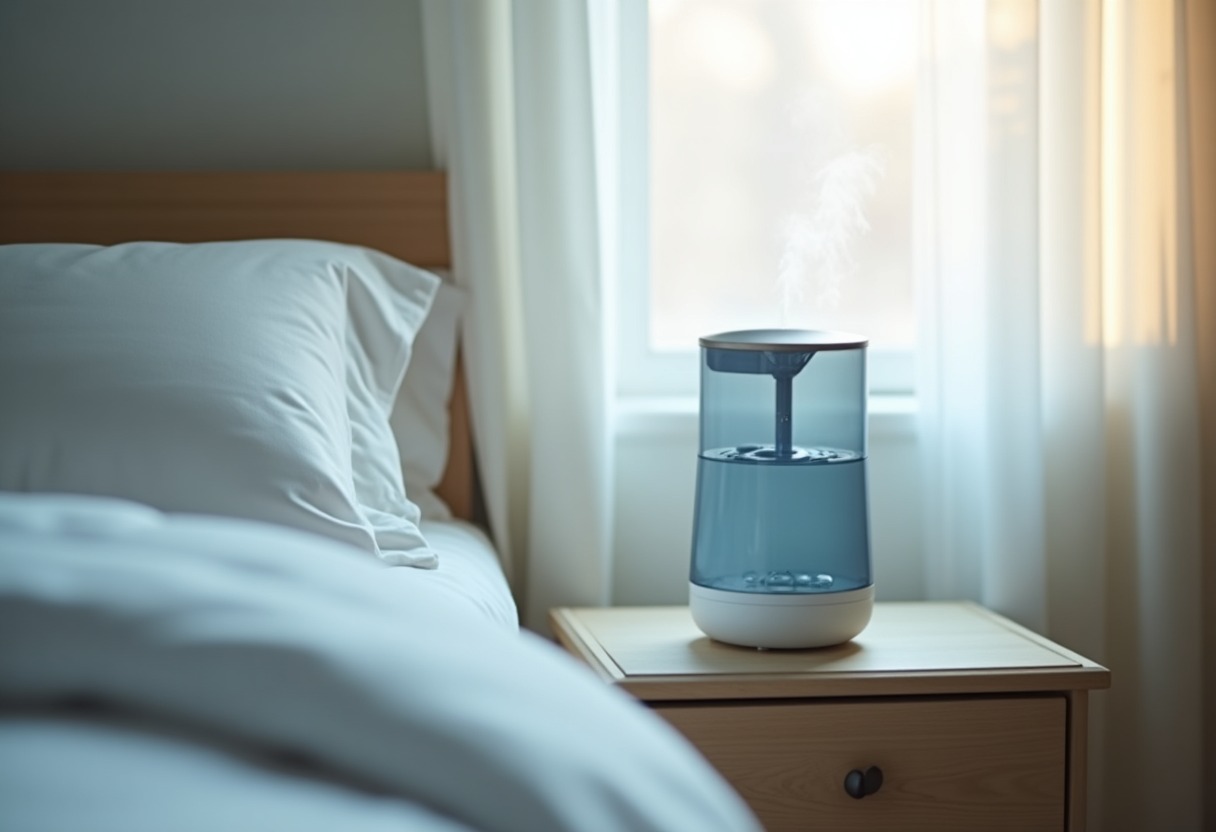
Dry indoor air doesn't just feel uncomfortable — it cracks your skin, irritates your respiratory system, and can damage wood furniture and musical instruments. Winter heating systems drop indoor humidity levels to desert-like 10-20%, while optimal indoor humidity sits between 30-50% for health and comfort.
Why Indoor Humidity Matters More Than You Think
Central heating systems strip moisture from your home's air with ruthless efficiency. Forced-air furnaces, wood stoves, and electric baseboard heaters all create convection currents that accelerate evaporation from every surface in your home — including your skin and respiratory system.
The health impacts hit immediately. Dry air allows viruses to survive longer on surfaces and makes your nasal passages more vulnerable to infection. Your skin loses moisture faster, leading to cracking and irritation. Static electricity builds up, zapping you every time you touch a doorknob. Wood furniture joints loosen, hardwood floors develop gaps, and houseplants struggle.
Beyond comfort, humidity levels directly affect your body's ability to regulate temperature. Proper humidity makes 68°F feel as comfortable as 72°F in dry conditions, reducing your heating costs. This relationship between humidity and perceived temperature works through your skin's evaporation rate — when air already contains moisture, your body doesn't lose heat as quickly through perspiration.
Ultrasonic vs Evaporative: The Two Humidifier Technologies That Actually Work
Most humidifiers fall into two proven categories: ultrasonic and evaporative. Both add moisture effectively, but through completely different mechanisms that affect maintenance, noise levels, and water quality requirements.
Ultrasonic humidifiers use high-frequency vibrations to break water into microscopic droplets, creating a cool mist without heating elements. They operate silently, consume minimal electricity, and produce visible mist that many people find satisfying. However, they broadcast whatever minerals exist in your water throughout your home as white dust. Hard water areas see this dust coating surfaces within days.
Evaporative humidifiers draw air through a wet wick or filter, allowing natural evaporation to add pure water vapor to your air. They self-regulate — as humidity rises, evaporation slows automatically. These units filter out minerals naturally, preventing white dust regardless of water hardness. The trade-off comes in noise levels from the fan and higher electricity consumption.
→ Shop ultrasonic humidifiers on Amazon
Warm mist humidifiers boil water to create steam, killing bacteria and viruses in the process. They work well in cold climates but consume significantly more electricity and create burn risks around children and pets. Cool mist models dominate the market for good reason — they're safer, more efficient, and equally effective at adding humidity.
Sizing Your Humidifier: Square Footage vs Output Capacity
Humidifier manufacturers rate their products in gallons per day output, but this number often assumes ideal conditions that don't match real-world use. A more reliable approach matches the unit's tank capacity to your room size and considers your local climate.
| Room Size | Tank Capacity Needed | Runtime Between Fills | Best Type | |-----------|---------------------|----------------------|-----------| | Up to 300 sq ft | 1-2 gallons | 12-16 hours | Ultrasonic tabletop | | 300-500 sq ft | 2-4 gallons | 16-24 hours | Evaporative tower | | 500-1000 sq ft | 4-6 gallons | 24-36 hours | Console evaporative | | 1000+ sq ft | 6+ gallons or multiple units | 36+ hours | Whole-house system |
Your local climate affects these calculations significantly. Homes in dry climates like Denver or Phoenix need larger capacity units than those in naturally humid regions. Older homes with poor insulation require more humidity output to maintain comfortable levels.
Consider your lifestyle when choosing tank size. Frequent travelers benefit from larger tanks that run unattended for days. Families with young children often prefer smaller units placed higher, away from curious hands, refilled more frequently.
→ Shop evaporative humidifiers on Amazon
Product Recommendations: Five Humidifier Types for Different Needs
Compact Ultrasonic for Bedrooms: Desktop units with 1-2 gallon tanks excel in personal spaces. They operate silently during sleep, produce soothing mist, and consume minimal electricity. Best for bedrooms, offices, and dorm rooms where white dust isn't a major concern.
Large Capacity Evaporative for Living Areas: Console models with 4-6 gallon tanks handle whole rooms without creating mineral dust. Built-in hygrometers automatically adjust output based on current humidity levels. These units require regular filter replacement but eliminate the white dust problem entirely.
→ Shop cool mist humidifiers on Amazon
Warm Mist for Cold Climates: Steam-based units work efficiently in very cold conditions where cool mist might feel uncomfortable. They sterilize water during the heating process, making them suitable for homes with well water or bacterial concerns. Higher electricity costs offset their convenience.
Whole-House Bypass Systems: Professional installations that integrate with your HVAC system provide consistent humidity throughout your home. These systems require annual maintenance and professional installation but eliminate the need for portable units in multiple rooms.
Travel and Personal Units: Battery-powered or USB-powered mini humidifiers work for hotel rooms, offices, and car travel. Limited capacity means they're supplements rather than primary humidity sources, but they provide targeted relief during travel or in dry office environments.
→ Shop warm mist humidifiers on Amazon
Maintenance Secrets Most Humidifier Owners Skip
Daily water changes prevent bacterial growth more effectively than any cleaning solution. Stagnant water becomes a breeding ground for microorganisms within 24-48 hours, especially in warm environments. Empty, rinse, and refill your humidifier's tank every day during active use.
Weekly deep cleaning eliminates mineral buildup and biofilm formation. Mix equal parts white vinegar and water, run this solution through a complete cycle, then rinse thoroughly. For ultrasonic models, use a soft brush to scrub the ultrasonic disc where minerals accumulate most heavily.
Filter replacement schedules vary dramatically based on your water hardness and usage patterns. Soft water areas might run evaporative filters for 3-4 months, while hard water regions need monthly replacements. Brown or hard filters indicate immediate replacement needs, regardless of the suggested timeline.
Water quality affects every aspect of humidifier performance. Distilled water eliminates mineral buildup in ultrasonic models but costs significantly more than tap water. A middle-ground approach uses filtered water from systems that reduce minerals without the expense of distilled water. For homes with extremely hard water, the investment in better water pays off through reduced maintenance and longer equipment life.
→ Shop humidifier filters on Amazon
Consider placement carefully for optimal performance. Humidifiers work best in central locations with good air circulation, away from direct sunlight and heat sources. Placing units on towels or water-resistant surfaces protects floors from condensation and spillage.
The often-overlooked aspect involves monitoring actual humidity levels rather than trusting built-in meters. Inexpensive digital hygrometers provide accurate readings that help you adjust settings based on real conditions rather than guesswork. Many people over-humidify, creating condensation problems and promoting mold growth.
Like choosing Best Air Purifiers Home 2026 for clean breathing, selecting the right humidifier involves matching technology to your specific situation rather than following general recommendations.
FAQ
How do I know what size humidifier I need for my room? Calculate your room's square footage and match it to humidifier tank capacity rather than manufacturer claims about coverage area. Rooms up to 300 square feet work well with 1-2 gallon tanks, while spaces over 500 square feet need 4+ gallon capacity for effective humidity control. Consider your ceiling height too — rooms with vaulted ceilings need larger capacity units than standard 8-foot ceiling rooms. Factor in your local climate, as dry desert climates require more humidification output than naturally humid regions.
Should I choose ultrasonic or evaporative humidifier technology? Ultrasonic humidifiers operate silently and efficiently but spread mineral dust throughout your home if you use hard water, requiring distilled water for best results. Evaporative humidifiers cost more to operate due to fan motors and require filter replacements, but they naturally filter out minerals and self-regulate humidity levels automatically. Choose ultrasonic for quiet operation in bedrooms with soft water, or evaporative for living areas and homes with hard water where mineral dust would be problematic.
How often should I clean my humidifier to prevent mold and bacteria? Empty and refill the water tank daily during active use, as stagnant water breeds bacteria within 24-48 hours. Perform weekly deep cleaning with equal parts white vinegar and water solution, running a complete cycle followed by thorough rinsing. Replace evaporative filters monthly in hard water areas or every 2-3 months with soft water, watching for brown coloration or mineral buildup that indicates immediate replacement needs. Clean the ultrasonic disc weekly in ultrasonic models where mineral deposits concentrate most heavily.
What's the ideal indoor humidity level for health and comfort? Maintain indoor humidity between 30-50% for optimal health, comfort, and protection of wood furniture and musical instruments. Humidity below 30% causes dry skin, respiratory irritation, increased static electricity, and makes you more susceptible to viral infections. Humidity above 50% promotes mold growth, dust mite proliferation, and condensation problems that can damage your home's structure. Use a separate digital hygrometer to monitor actual levels rather than trusting built-in humidistat readings, which often prove inaccurate.
Can I use tap water in my humidifier or do I need distilled water? Ultrasonic humidifiers require distilled or demineralized water to prevent white mineral dust from coating surfaces throughout your home, especially in hard water areas where mineral content is high. Evaporative humidifiers can use tap water because their wick filters trap minerals naturally, though filter life decreases with harder water requiring more frequent replacements. Filtered water from home filtration systems provides a cost-effective middle ground, reducing minerals without the expense of distilled water for most applications.
The right humidifier transforms your winter indoor environment from a dry, static-filled space into a comfortable haven that protects your health, belongings, and peace of mind.
Some links on this page are affiliate links. We may earn a small commission if you purchase through them, at no extra cost to you.
As an Amazon Associate we earn from qualifying purchases. This article contains affiliate links; if you buy through them we may earn a small commission at no additional cost to you.