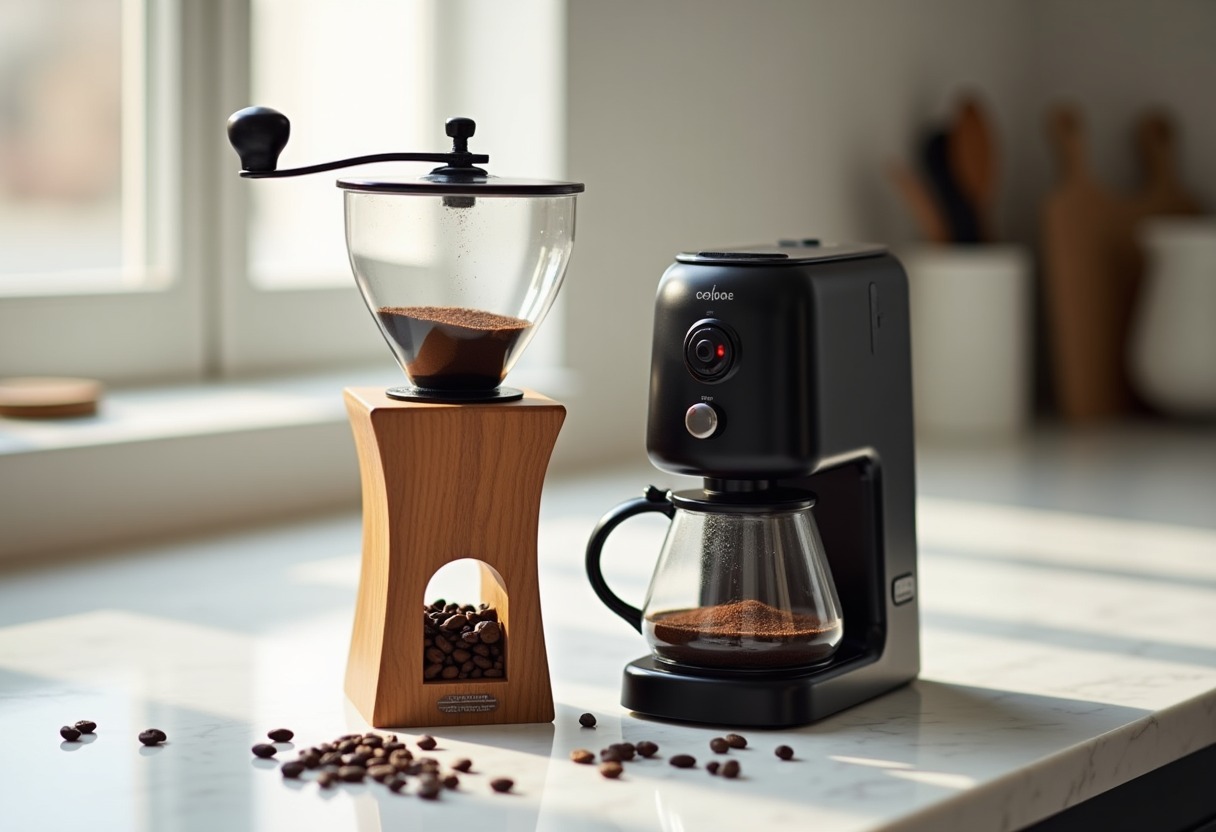
Pour over coffee demands precise particle size distribution, but most home grinders produce wildly inconsistent results that sabotage extraction. The difference between a $30 blade grinder and a quality burr grinder isn't subtle—it's the gap between muddy, bitter coffee and balanced extraction that showcases your beans' true character.
Why Grind Consistency Makes or Breaks Pour Over Coffee
Pour over brewing exposes every flaw in your grind. Unlike espresso, where high pressure forces water through coffee regardless of particle uniformity, pour over relies on gravity and time. Uneven grounds create chaos: fine particles over-extract into bitterness while large chunks under-extract, leaving sour, vegetal notes.
Burr grinders crush beans between two abrasive surfaces, creating uniform particles that extract at similar rates. Blade grinders chop beans randomly, producing everything from powder to chunks in a single batch. This inconsistency explains why your V60 tastes different every morning, even with identical timing and technique.
The target grind size for pour over sits between drip coffee and French press—medium-fine particles that allow 4-6 minute extraction times. Quality burr grinders offer stepped or stepless adjustment, letting you dial in the precise size for your specific brewing method, bean origin, and roast level.
Manual vs Electric Burr Grinders: The Real Trade-offs
Manual grinders dominate the budget category while delivering exceptional grind quality. Hand-cranking forces you to slow down, but the physical effort pays dividends in particle uniformity. Most manual burr grinders use ceramic or steel burrs that rival electric models costing three times more.
Electric burr grinders prioritize convenience and speed. Premium models incorporate features like timed dosing, retention chambers, and multiple grind settings. However, motor heat can affect bean oils during extended grinding sessions, and cheaper electric models often struggle with consistency compared to similarly-priced manual options.
The noise factor matters for early morning routines. Electric grinders wake the household, while manual models operate silently. Battery-powered options bridge this gap but add complexity and maintenance concerns.
Here's the breakdown of key differences:
| Feature | Manual Burr Grinder | Electric Burr Grinder | |---------|-------------------|---------------------| | Grind Quality | Excellent at all price points | Varies significantly by price | | Speed | 1-2 minutes per dose | 10-30 seconds per dose | | Noise Level | Nearly silent | Loud to very loud | | Price Range | $30-400 | $100-2000+ | | Maintenance | Simple, fewer parts | Complex, motor servicing |
Best Burr Grinder Categories for Pour Over
Entry-Level Manual Excellence: The Hario Mini Mill and Porlex Mini deliver surprising quality for under $50. Their ceramic burrs produce consistent medium-fine grounds perfect for single-cup pour overs. Expect 60-90 seconds of grinding for a full dose, but the particle uniformity rivals grinders costing twice as much.
→ Shop manual coffee grinder on Amazon
Mid-Range Manual Champions: The Comandante C40 and 1Zpresso JX-Pro represent the sweet spot for serious pour over enthusiasts. These $200-300 grinders feature precision-engineered steel burrs, micro-adjustment capabilities, and build quality that lasts decades. The grinding experience feels effortless compared to budget models, and particle consistency approaches commercial-grade standards.
Electric Convenience Winners: The Baratza Encore and OXO Brew dominate the electric entry category. Both offer 40+ grind settings, consistent results for pour over ranges, and reasonable noise levels. The Encore's repair-friendly design and readily available parts make it particularly appealing for long-term ownership.
→ Shop electric burr grinder on Amazon
Premium Electric Performance: The Baratza Virtuoso+ and Breville Smart Grinder Pro add timed dosing, digital displays, and enhanced burr sets. These $200-400 models handle daily grinding routines without the arm workout, making them ideal for households brewing multiple cups or entertaining guests regularly.
Professional-Grade Investment: The Mahlkönig EK43S and Baratza Forté represent the ceiling for home pour over grinding. Their commercial burr sets and advanced calibration systems ensure laboratory-level consistency, but the $500+ price tags require serious coffee commitment to justify.
→ Shop burr coffee grinders on Amazon
Advanced Grinding Techniques Most Guides Skip
Burr seasoning significantly impacts new grinder performance. Run 1-2 pounds of mediocre beans through fresh burrs before grinding your premium coffee. This process removes manufacturing oils, smooths microscopic rough edges, and stabilizes particle distribution patterns.
Temperature management affects extraction even with quality burr grinders. Grinding immediately after roasting traps CO2 in particles, creating uneven water penetration during brewing. Allow beans to degas 2-4 days post-roast for optimal results, especially with lighter roasts that retain more gas.
Retention affects dose consistency in ways most home brewers ignore. Electric grinders hold 0.2-2 grams of ground coffee in chambers and chutes. Single-dosing—weighing exact bean quantities before grinding—eliminates stale coffee mixing with fresh grounds and ensures consistent brewing ratios.
Cleaning frequency determines grind quality over time. Oily beans leave residue that affects particle flow and can introduce rancid flavors. Wipe burr chambers weekly and deep-clean monthly with specialized grinder cleaning tablets or uncooked rice for manual models.
The relationship between your grinder and other brewing equipment matters more than most realize. Pair your burr grinder selection with quality tools from our Best Amazon Kitchen Gadgets 2026 guide, and consider upgrading your water heating setup with recommendations from our Best Electric Kettles 2026 review for complete brewing control.
→ Shop ceramic burr grinder on Amazon
Creating a complete coffee station requires thoughtful equipment curation. Our Kitchen Foundations guide covers essential brewing accessories that complement your grinder investment, while proper countertop organization keeps your morning routine efficient.
→ Shop stainless steel burr grinder on Amazon
FAQ
What grind size should I use for pour over coffee with a burr grinder? Medium-fine works for most pour over methods, appearing like coarse sand or kosher salt. Start with setting 15-20 on a Baratza Encore, then adjust based on extraction time and taste. If your coffee brews too quickly (under 4 minutes) and tastes sour, go finer. If it takes over 6 minutes and tastes bitter, go coarser. Different pour over devices require slight adjustments—V60 typically needs slightly finer than Chemex due to filter thickness differences.
How much should I spend on a burr grinder for pour over coffee? Expect to spend $150-300 for a grinder that significantly improves your pour over experience. Manual options like the 1Zpresso JX-Pro ($159) or Comandante C40 ($249) deliver exceptional value, while electric models like the Baratza Encore ($169) or Virtuoso+ ($249) add convenience. Spending under $100 limits you to entry-level manual grinders that work but require patience. Above $300, improvements become incremental unless you're brewing for large groups or pursuing competition-level precision.
Is a manual burr grinder really better than an electric one for pour over? Manual grinders often provide better grind consistency per dollar spent, especially under $200. They eliminate motor heat that can affect bean oils, operate silently, and have fewer mechanical points of failure. However, electric grinders offer superior convenience and speed, making them practical for daily use or multiple-cup brewing. The "better" choice depends on your priorities—choose manual for maximum quality per dollar, electric for convenience and speed.
How often should I clean my burr grinder for pour over coffee? Clean your grinder weekly if you use it daily, focusing on removing coffee oil buildup and old grounds. For manual grinders, disassemble and rinse burrs with warm water, drying completely before reassembly. Electric grinders require specialized cleaning tablets monthly or grinding uncooked rice to absorb oils and debris. Signs you need cleaning include slower grinding, inconsistent particle size, or off-flavors in your coffee. Oily beans require more frequent cleaning than light roasts.
Can I use the same burr grinder for pour over and espresso? Quality burr grinders handle both brewing methods, but you'll constantly adjust grind settings between uses. Pour over requires medium-fine grounds while espresso demands fine powder—typically 15-20 settings apart on most grinders. This frequent adjustment can be inconvenient for daily brewing and may introduce inconsistency as you dial in settings. Consider dedicated grinders if you brew both methods regularly, or choose stepless grinders with precise adjustment capabilities for easier transitions between brewing styles.
A quality burr grinder transforms pour over coffee from guesswork into precision, making every cup a deliberate expression of your beans' potential rather than a lucky accident.
Some links on this page are affiliate links. We may earn a small commission if you purchase through them, at no extra cost to you.
As an Amazon Associate we earn from qualifying purchases. This article contains affiliate links; if you buy through them we may earn a small commission at no additional cost to you.