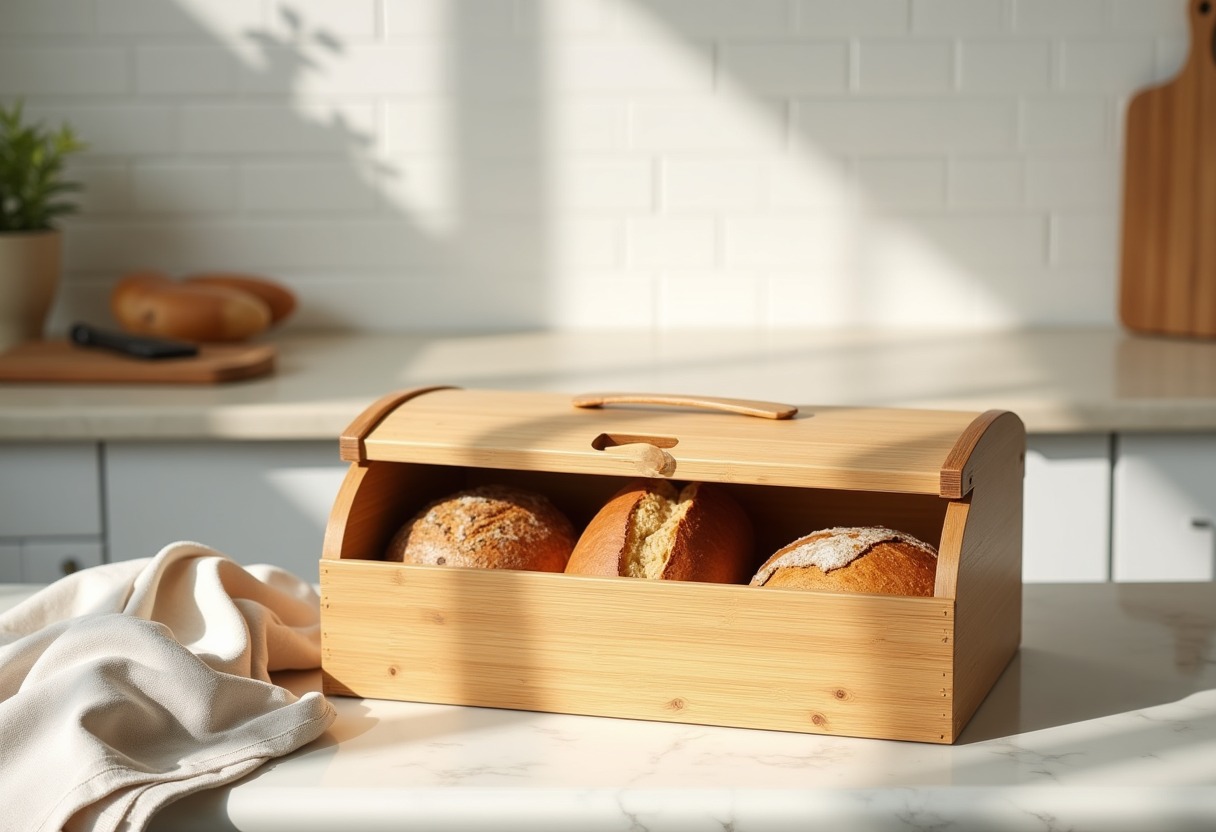
Bread goes stale not from drying out, but from starch retrogradation—a molecular process where starch crystals realign and harden. The right bread storage container slows this by maintaining optimal humidity (around 50-60%) while allowing just enough airflow to prevent mold growth. Most people either suffocate their bread in plastic bags or expose it to too much air on the counter, cutting freshness from 5-7 days down to 2-3.
Why Bread Boxes Actually Work
Bread requires a specific microclimate. Too much moisture creates condensation that breeds mold. Too little, and the crust draws moisture from the crumb, accelerating staling. According to research on staling mechanisms, temperature plays a massive role—bread stales fastest between 36-40°F, which is why refrigerating bread is counterproductive unless you're freezing it long-term.
A proper bread storage container creates a sealed-but-not-airtight environment. Ventilation holes or slightly loose-fitting lids allow ethylene gas (produced as bread ages) to escape while preventing the rapid moisture loss that happens on open shelves. Materials matter significantly: bamboo naturally wicks excess moisture, powder-coated metal regulates temperature better than plastic, and ceramic maintains the most stable humidity but weighs considerably more.
The size you need depends on what you're storing. A standard loaf of sandwich bread measures roughly 5 x 4 x 8 inches. Artisan boules can be 8-10 inches in diameter. If you bake regularly or buy multiple loaves weekly, you need minimum interior dimensions of 13 x 7 x 7 inches. Anything smaller forces awkward positioning that can compress softer breads.
Material Comparison: What Actually Keeps Bread Fresh
Different materials create different storage environments, and matching material to your bread type matters more than most reviews admit.
| Material | Humidity Control | Temperature Stability | Best For | Typical Price Range | |----------|------------------|----------------------|----------|-------------------| | Bamboo | Excellent—wicks excess moisture naturally | Moderate—influenced by room temp | Crusty artisan loaves, baguettes | $25-$50 | | Powder-Coated Metal | Good—sealed but allows minimal gas exchange | Excellent—insulates against temp swings | All bread types, especially in warm kitchens | $30-$70 | | Enamel/Ceramic | Excellent—maintains consistent microclimate | Excellent—dense material resists change | Sourdough, enriched doughs with higher moisture | $40-$90 | | Wood (non-bamboo) | Good to excellent depending on finish | Moderate | Crusty breads, not ideal for soft sandwich loaves | $35-$80 |
Bamboo specifically absorbs approximately 3x its weight in moisture according to material science studies, making a → Shop bamboo bread box on Amazon particularly effective for high-moisture breads that might otherwise develop soggy bottoms in sealed containers. The natural antimicrobial properties of bamboo also inhibit mold growth more effectively than plastic alternatives.
Metal bins, particularly those with roll-top lids or magnetic closures, excel at maintaining consistent internal environments. The thermal mass of metal resists kitchen temperature fluctuations—crucial if your counter sits near a stove or gets afternoon sun. Look for models with small ventilation holes or deliberately imperfect seals rather than gasket-sealed designs. A → Shop metal bread bin on Amazon with powder coating prevents condensation from forming on interior surfaces.
Ceramic and enamel options weigh 2-4 pounds empty but create the most stable humidity environment. They're worth the counter real estate if you primarily store sourdough or other naturally leavened breads with thicker crusts that benefit from slower moisture equilibration.
Bread Box Design Features That Matter
Capacity specifications mislead constantly. A box advertised as "holds two loaves" often means two standard sandwich loaves stacked—which compresses the bottom loaf and creates uneven moisture distribution. Calculate actual interior volume: multiply length × width × height in inches, then divide by 231 to get gallons. You want at least 0.5 gallons (115 cubic inches) per standard loaf with room to spare.
Ventilation holes should be 3-6mm in diameter—large enough for gas exchange, small enough to deter insects. Placement matters: top and side ventilation creates cross-flow that prevents hot spots. Bottom-only vents can trap moisture against the base. Some countertop bread storage designs use slatted bamboo bases that elevate bread above the box floor, promoting airflow underneath.
Lid mechanisms affect daily usability more than you'd expect. Roll-top designs save counter space but often jam after a year of use. Hinged lids require clearance behind the box. Lift-off lids are durable but require two hands. Magnetic closures strike the best balance—secure enough to maintain environment, easy enough for one-handed access while unloading groceries.
Interior height determines what you can actually store. Many boxes measure 6-7 inches internally, which barely accommodates tall sandwich loaves standing upright. If you buy bakery boules or bake your own, you need 8+ inches of clearance. Measure your typical loaves before buying.
Best Bread Box Types for Different Storage Needs
Compact bamboo boxes (12-14 inches wide) suit small kitchens and single-loaf households. The natural moisture regulation of bamboo works especially well for rustic breads with thick crusts. These typically include a hinged lid with magnetic closure and a slatted bamboo base. They maintain freshness for 4-5 days with crusty artisan loaves but can over-dry soft sandwich bread. Price range: $28-$45.
Mid-size metal bins (15-17 inches wide) accommodate two standard loaves side-by-side or one large sourdough. Powder-coated steel models from established kitchenware brands include small ventilation holes and bamboo cutting board lids that double as serving boards. These perform consistently across bread types and climates. The best ones have rolled edges and welded seams rather than crimped construction. Price range: $35-$65.
Large capacity enamel boxes (18+ inches wide) store multiple loaves plus bagels or rolls in separate compartments. Some include removable dividers for organizing different bread types. Enamel over steel combines metal's durability with ceramic-like humidity control. These weigh 5-8 pounds but rarely need replacing. Price range: $55-$95.
Dual-chamber designs separate crusty from soft breads in one unit. A bamboo section for baguettes sits alongside a sealed metal compartment for sandwich loaves. These make sense for households that buy multiple bread types weekly but take up 18-20 inches of linear counter space. Price range: $60-$85.
Vertical storage towers maximize small counters by stacking bread vertically in separate compartments. These work best for packaged bread or bagels rather than large artisan loaves. Ventilation in vertical designs is harder to get right—many trap moisture in lower compartments. Only consider these if horizontal space is truly unavailable. Price range: $30-$50.
For a complete kitchen setup, consider pairing your bread storage with options from our Best Amazon Kitchen Gadgets 2026 guide, which includes complementary storage solutions.
Advanced Bread Storage Strategies Most Guides Skip
Bread type determines optimal storage temperature. Crusty sourdough and baguettes maintain peak texture at 65-70°F. Enriched breads like brioche or challah prefer slightly cooler (60-65°F). Whole grain breads stale slower when stored at the cooler end of the spectrum due to higher fiber content disrupting starch crystallization.
Pre-slicing bread before storage actually extends freshness slightly by allowing more even moisture distribution throughout the loaf. The increased surface area concern is overblown—cut loaves in bread boxes maintain quality for 4-5 days versus 5-6 for uncut loaves, a marginal difference for most households.
An → Shop airtight bread box on Amazon sounds ideal but creates problems. Fully airtight containers trap moisture against the bread surface, softening crusts within 24 hours. Artisan bakers specifically recommend "breathable" storage. If your bread develops condensation inside the box overnight, you need more ventilation.
Adding a small food-safe silica packet to your bread box helps in humid climates above 70% relative humidity. Use the reusable indicating type that changes color when saturated—typically one 10-gram packet per bread box, replaced monthly. This prevents the soggy bottom issue common in coastal or basement kitchens.
Cleaning frequency affects longevity more than material quality. Bread crumbs trap moisture and grow mold, contaminating subsequent loaves. Wipe bamboo interiors weekly with diluted white vinegar (1:4 ratio). Metal bins tolerate dish soap and water. Ceramic can go in the dishwasher. A bread box that isn't cleaned monthly becomes a mold incubator regardless of design quality.
Position matters: keep bread boxes away from appliances that generate heat. A box sitting next to your Best Electric Kettles 2026 or coffee station experiences temperature cycling that accelerates staling. Similarly, avoid placement above refrigerators (heat exhaust) or near windows (direct sunlight).
What to Actually Look for When Buying
Read interior dimensions, not exterior measurements. A box measuring 16 x 10 x 8 inches externally might have 14 x 8 x 6.5 inches internally after accounting for material thickness. That seemingly small difference matters when storing wide boules or tall sandwich loaves.
Check weight capacity if you're considering bamboo. Cheaper bamboo boxes use thin slats that bow under the weight of multiple loaves. Quality bamboo should be at least 0.4 inches thick on the base and 0.3 inches on sides. Press firmly on the lid—it shouldn't flex more than a quarter-inch.
Ventilation holes should be factory-drilled, not punched. Punched holes have rough edges that trap crumbs and create weak points where cracks develop. Look at close-up product photos for clean, countersunk holes with smooth edges.
Lid fit determines actual storage performance. The best bread boxes have lids that sit slightly loose—there should be barely perceptible play (1-2mm) when you lift at the corners. This creates the controlled gas exchange that prevents both mold and rapid staling. Gasket-sealed "airtight" lids work against proper bread storage.
For metal boxes, examine the finish carefully. Powder coating should be even with no thin spots or bare metal showing. Cheap paint chips within months from normal contact with bread bags or utensils. Tap the sides with your knuckle—quality metal rings clearly while thin gauge steel sounds dull and dampened.
A → Shop countertop bread keeper on Amazon shouldn't require tools to assemble or have loose hinges out of the box. If assembly instructions exceed one page, the design is unnecessarily complex for what should be a simple container.
FAQ
How long does bread actually stay fresh in a bread box compared to other storage methods?
Bread boxes extend freshness by 3-5 days compared to leaving bread unwrapped on the counter, which typically results in staleness within 2-3 days. Plastic bags create a humid environment that keeps sandwich bread soft for 4-5 days but turns crusty artisan bread soggy within 24 hours. Paper bags allow too much air exposure, causing staling in 2-3 days. A proper bread storage container with controlled ventilation maintains the ideal microclimate—crusty breads keep their texture for 5-6 days while soft breads stay fresh for 4-5 days without developing mold. Freezing beats all room-temperature methods for long-term storage beyond one week, preserving quality for up to three months.
Should I put bread in a bread box while it's still warm from baking or buying?
Never store warm bread in any enclosed container. Bread fresh from the oven or bakery contains significant residual heat and moisture that needs to dissipate—typically 1-2 hours of cooling on a wire rack at room temperature. Placing warm bread in a bread box creates condensation that soaks into the crust and crumb, resulting in a gummy texture and promoting mold growth within 48 hours. The internal temperature of fresh bread can reach 200°F, and even seemingly cool bread straight from a bakery bag often retains enough heat to create problems. Wait until the loaf reaches room temperature and any surface moisture has evaporated before transferring to your storage container. This single habit prevents most bread storage failures.
Do bamboo bread boxes really work better than metal or plastic ones?
Bamboo bread boxes excel specifically for crusty artisan breads because bamboo naturally absorbs excess moisture while maintaining adequate humidity. This prevents the soggy-crust problem that happens when crusty bread sits in too-humid environments. For soft sandwich breads or enriched doughs like brioche, metal bins with controlled ventilation actually perform better by maintaining more consistent internal conditions without over-drying. Plastic bread boxes rarely work well regardless of bread type—they either seal too tightly (causing sogginess) or ventilate too freely (causing rapid staling), and plastic doesn't regulate humidity naturally like bamboo or metal. Material choice should match your primary bread type: bamboo for rustic loaves, powder-coated metal for variety or soft breads, ceramic for maximum humidity stability with naturally-leavened breads.
Can I store different types of bread together in one bread box?
Storing different bread types together generally works if they have similar moisture content and storage needs. Two sandwich loaves or a baguette alongside sourdough coexist fine in a properly-ventilated bread box. However, avoid mixing extremely different types—storing soft sandwich bread next to crusty baguettes can transfer moisture unevenly, softening the baguette while drying the sandwich bread. Strong-flavored breads like rye or onion bread can transfer odors to milder breads in enclosed storage within 2-3 days. If you regularly buy multiple distinct bread types, either use a dual-chamber bread box with separate compartments or stagger your purchases so you're not storing incompatible varieties simultaneously. Bagels, English muffins, and rolls store well alongside standard loaves since they're typically pre-sliced and bagged, creating natural separation.
What's the best way to clean and maintain a bread box?
Empty and clean your bread box weekly to prevent mold spore accumulation and crumb buildup. For bamboo boxes, wipe the interior with a cloth dampened with diluted white vinegar (1 part vinegar to 4 parts water), then dry immediately with a clean towel—never soak bamboo or leave it wet. Metal and enamel boxes can be washed with warm soapy water and dried thoroughly; some are dishwasher-safe, but check manufacturer specifications. Pay special attention to corners, seams, and ventilation holes where crumbs accumulate. Once monthly, leave the box open and empty for 24 hours to air out completely and reset the interior microclimate. If you spot any mold, clean immediately with undiluted white vinegar, let sit for 10 minutes, wipe clean, and air-dry for a full day before using again. Proper maintenance extends bread box lifespan to 5-10 years depending on material.
The Bottom Line on Bread Storage
The difference between bread lasting three days and six days comes down to matching storage method to bread type and maintaining that 50-60% humidity sweet spot with controlled airflow—not rocket science, just understanding that bread needs to breathe without drying out.
Some links on this page are affiliate links. We may earn a small commission if you purchase through them, at no extra cost to you.
As an Amazon Associate we earn from qualifying purchases. This article contains affiliate links; if you buy through them we may earn a small commission at no additional cost to you.